The baby is asleep, finally. Your wrist aches from the last feed, your ankles are still puffy, and someone has just told you, kindly, not to touch cold water. In Korea, you will hear a lot about recovering properly after birth. What recovering properly actually means depends on how long ago you gave birth.
TIMING
When should postpartum recovery start?
“Postpartum recovery” sounds like one thing that happens once. In practice, the body at two weeks, at three months and at six months needs different things, so the prescription changes with the timeline.
Joints and the uterus settle back. The focus is swelling, circulation and protecting the joints.
Once the body has settled, the focus moves to energy and to weight, more actively.
Recovery is fastest inside six months, but a year on is not too late. Many mothers come once breastfeeding ends.
So the answer to “when?” is “now, written for now.”
AT DEAR
What happens at your first visit?
- How birth changed you
When and how you gave birth, swelling, tiredness, sleep, digestion, and joints like the wrist and knee.
- Examination
Pulse, questions and an abdominal examination, to see where your body is now.
- What comes first
I separate the thing to resolve first from the complaints that follow it, and prescribe for that.
- Treatment and home care
A herbal prescription, acupuncture or pharmacopuncture when it helps, and what to eat and do at home.
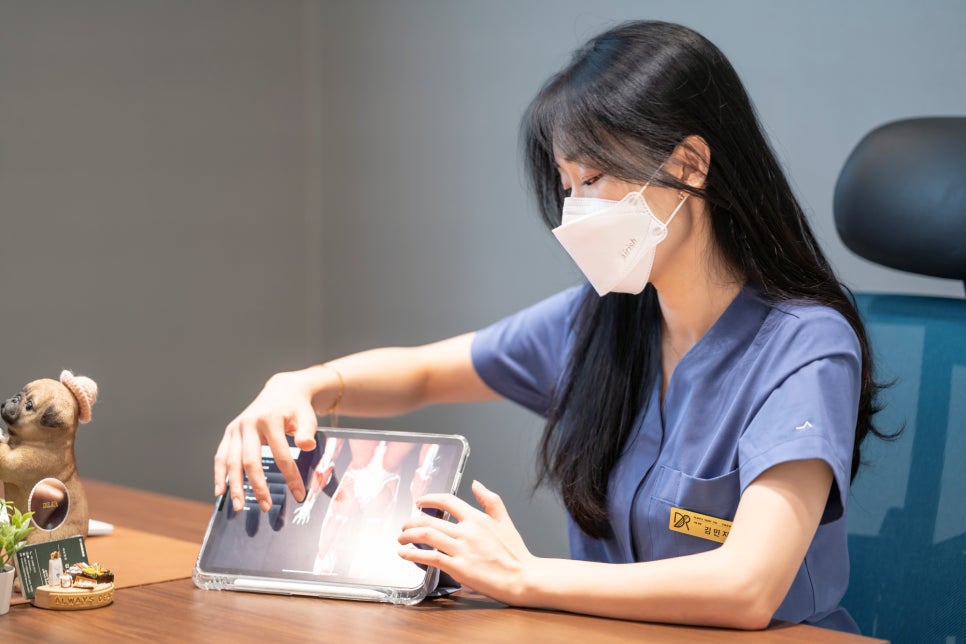
Bring the names of any iron, probiotics or breastfeeding supplements you take, and I check that nothing overlaps.
Recovery does not stop at a prescription. You leave with what to eat and how to move at home, so the recovery keeps going between visits.
CASE
What does it look like when swelling eases?
Swelling down, and back to her pre-wedding weight in three months
An adult woman · recurring leg swelling · from our column on leg swelling after birth
Some days pressing left a dent, other days her legs felt hard and knotted. Massage lightened them briefly, but it never lasted, and the change in her legs was getting her down.
Three months of treatment aimed at both, checking not only weight but how heavy her body felt, her muscle and her body fat.
The swelling went down, she reached her pre-wedding weight, and her muscle and body fat readings improved on where they had been.
Identifying details have been removed. This describes one patient’s course; results and timing differ from person to person.
Read what patients say about DEAR
SANHUJORI
What is Korean postpartum care, and what part of it matters?
Korean postpartum care, sanhujori, is known well beyond Korea: warm rooms, seaweed soup, weeks of rest, and a long list of things not to do. Much of the list is about cold, and about a condition Koreans call sanhupung, literally “postpartum wind”: aches, chills and stiffness that appear after birth.
Korea’s 2024 clinical practice guideline for sanhupung describes the name as a folk term that gathers many symptoms under one word. That is useful to know, because the symptoms under it do not share one cause, and they are not all treated the same way.
ONE WORD, THREE PROBLEMS
Is all postpartum pain the same?
Following the guideline’s diagnostic steps, “postpartum wind” splits into at least three kinds.
The thumb side of the wrist, a finger joint, a knee, the sole of the foot. I start with the load on that spot.
Cold that is hard to place, sweating, tiring easily. I look at what is depleted and what is stuck.
Thyroid changes, anemia and similar conditions can feel like “postpartum wind”. I ask about your recent check-ups and tests at the first visit.
More than one often sits in the same person, which is why the first visit sorts them before anything is prescribed.
WRIST
Why does the wrist start hurting months after birth?
Every lift, burp and bottle puts the wrist in the same bent position with the thumb taking the load. Pain on the thumb side of the wrist is often de Quervain’s tenosynovitis, an irritated tendon sheath.
were first diagnosed with de Quervain’s between pregnancy and a year after birth, in national insurance records.
In 63 mothers compared with 630 without it.
A birth weight over 3.5 kg or twins did not raise the risk; a first birth and a pregnancy over 40 weeks did.
So the wrist is not simply worn out by a heavy baby. Months of the same movement combine with the state of the body at that time. That is why I treat the wrist together with how you are recovering overall, and why the timing of the pain matters as much as its place.
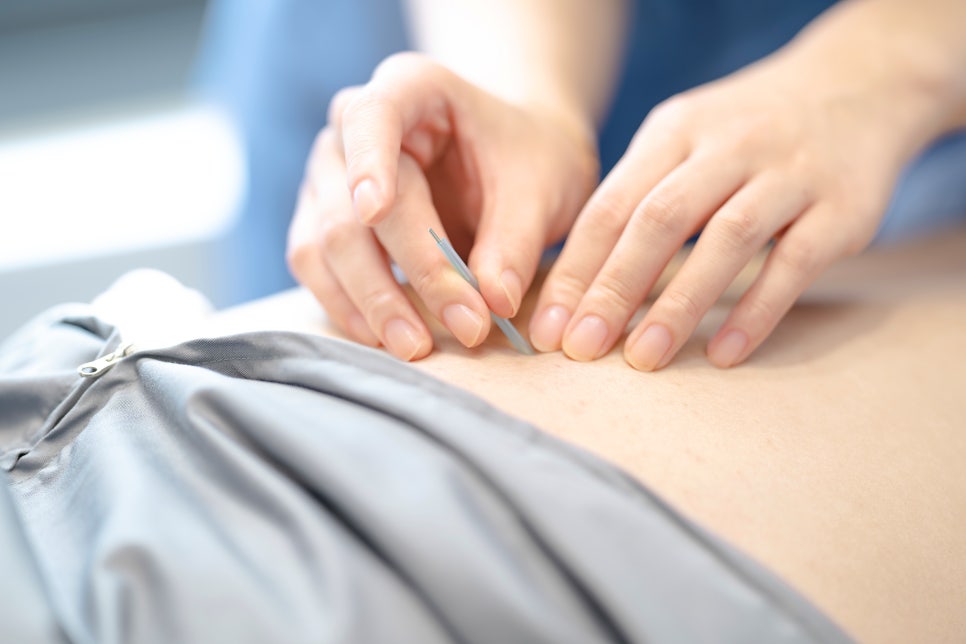
For pain you can point to, I start with the load on that spot, and add acupuncture or pharmacopuncture when it helps, along with what to change at home.
SWELLING
Why do the legs stay swollen?
Pregnancy raises blood volume and body fluid, and the body clears that extra fluid over the weeks after birth. Late in pregnancy the uterus also presses on the veins of the pelvis. Fluids given around delivery, less movement after a cesarean, short sleep and long hours seated to feed all add to it.
I check whether both legs swell evenly, whether pressing leaves a mark, whether it is worse by evening, and whether belly bloating and constipation come with it. Treatment combines acupuncture for the legs and abdomen with a herbal prescription matched to the kind of swelling.
HERBAL MEDICINE
Can I take herbal medicine while breastfeeding?
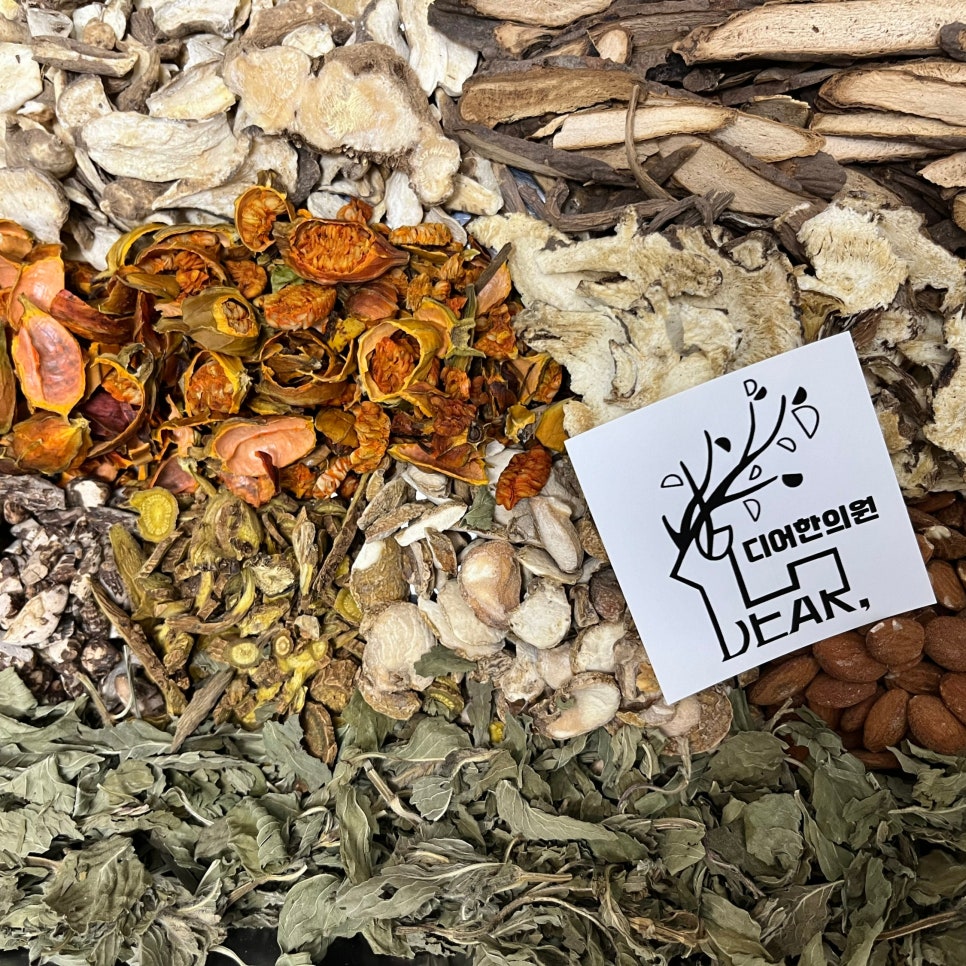
Yes. Postpartum herbal medicine at DEAR is written from herbs that can be taken while breastfeeding, and breastfeeding is one of the main conditions I prescribe around, so tell me at your first visit.
The research supports it: a 2023 systematic review of 9 randomized trials with 652 mothers found herbal medicine, alone or combined with other treatment, improved postpartum pain scores, disability and quality of life.
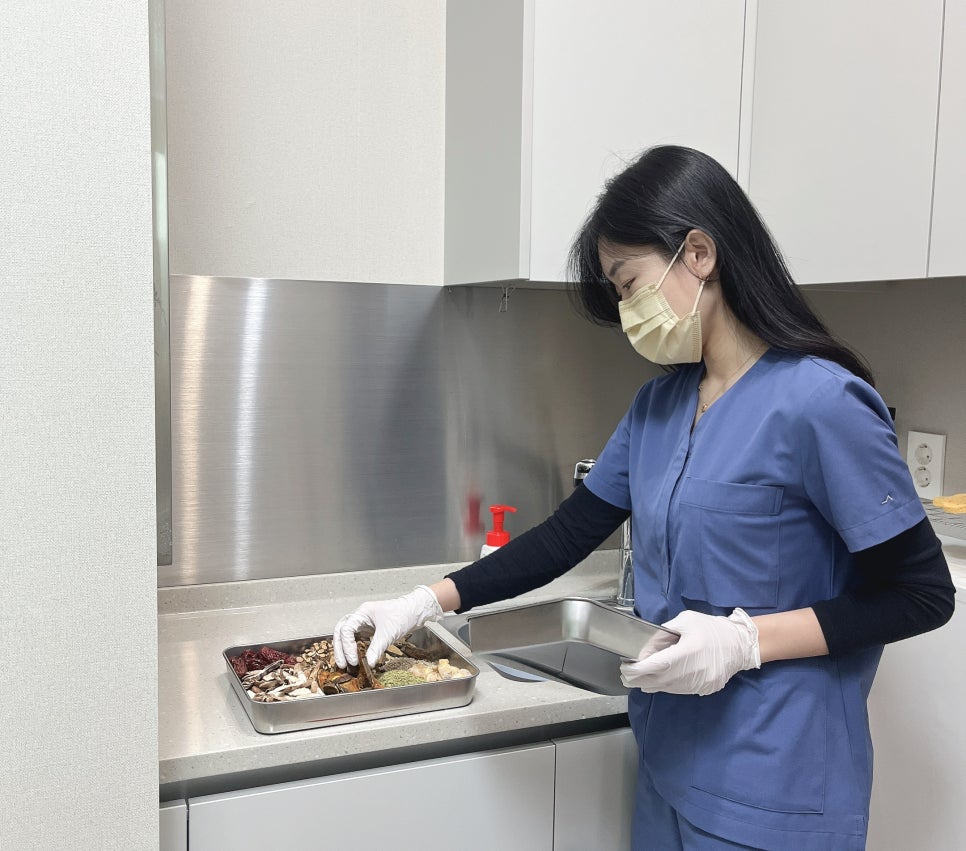
A postpartum prescription is not one fixed formula. Swelling that leaves a mark and a heavy body call for different herbs from a body that tires easily, sweats and has weak legs. The herbs are Korean-grown and meet the Ministry of Food and Drug Safety standard, and the decoction is made in our own clinic.
WEIGHT
When can I start thinking about weight?
Not in the first weeks. Starving or pushing hard on exercise right after birth tends to drain energy, reduce milk and worsen joint pain. From around three months, once the body has settled, weight can be approached more actively, and the prescription can move on to swelling, circulation, digestion and appetite together. How I plan that is in herbal weight loss at DEAR.
If recovery feels slower than it should, message us. I will see you myself, in English, and we will start from where your body is today.
DEAR KOREAN MEDICINE CLINIC
About a 10-minute walk from Gangnam Station Exit 5 · +82-2-3486-1777
- Mon·Tue·Wed·Fri10:00–20:00
- Lunch13:00–14:00
- Thu14:00–20:00
- Sat10:00–15:00
- SunClosed
FAQ
Frequently asked questions
Can I take herbal medicine while breastfeeding?
Yes. Postpartum herbal medicine at DEAR is written from herbs that can be taken while breastfeeding. Tell me you are breastfeeding at your first visit, along with any supplements you take.
When should I start?
There is no fixed time. The first three months focus on swelling, circulation and joints; after that, energy and weight. A year after birth is not too late.
Can someone else get the herbal medicine for me?
No. I prescribe after seeing the mother herself. Family members are welcome to come along.
Can I have my consultation in English?
Yes. Director Minji Kim consults directly in English, Japanese and Chinese, so you won’t need an interpreter.
How do I book?
Appointments are given priority, so we recommend booking before your visit. The most reliable way is an Instagram DM to @dearhani__, or you can call us at +82-2-3486-1777.
Sources
- Kwon NY, Lee HY, Hwang SI, et al. Herbal medicine for postpartum pain: a systematic review of puerperal wind syndrome (Sanhupung). Healthcare (Basel). 2023;11(20):2743.
- Bae KJ, Baek GH, Lee Y, Lee J, Jo YG. Incidence and risk factors for pregnancy-related de Quervain’s tenosynovitis in South Korea: a population-based epidemiologic study. Clin Orthop Surg. 2023;15(1):145–152.
- Daglan E, Morgan S, Yechezkel M, et al. Risk factors associated with de Quervain tenosynovitis in postpartum women. Hand (N Y). 2024;19(4):643–647.
- National Institute for Korean Medicine Development. Korean Medicine Clinical Practice Guideline for Sanhupung (postpartum wind). 2024.
This article provides general health information and does not replace an individual diagnosis or treatment. Results differ from person to person.