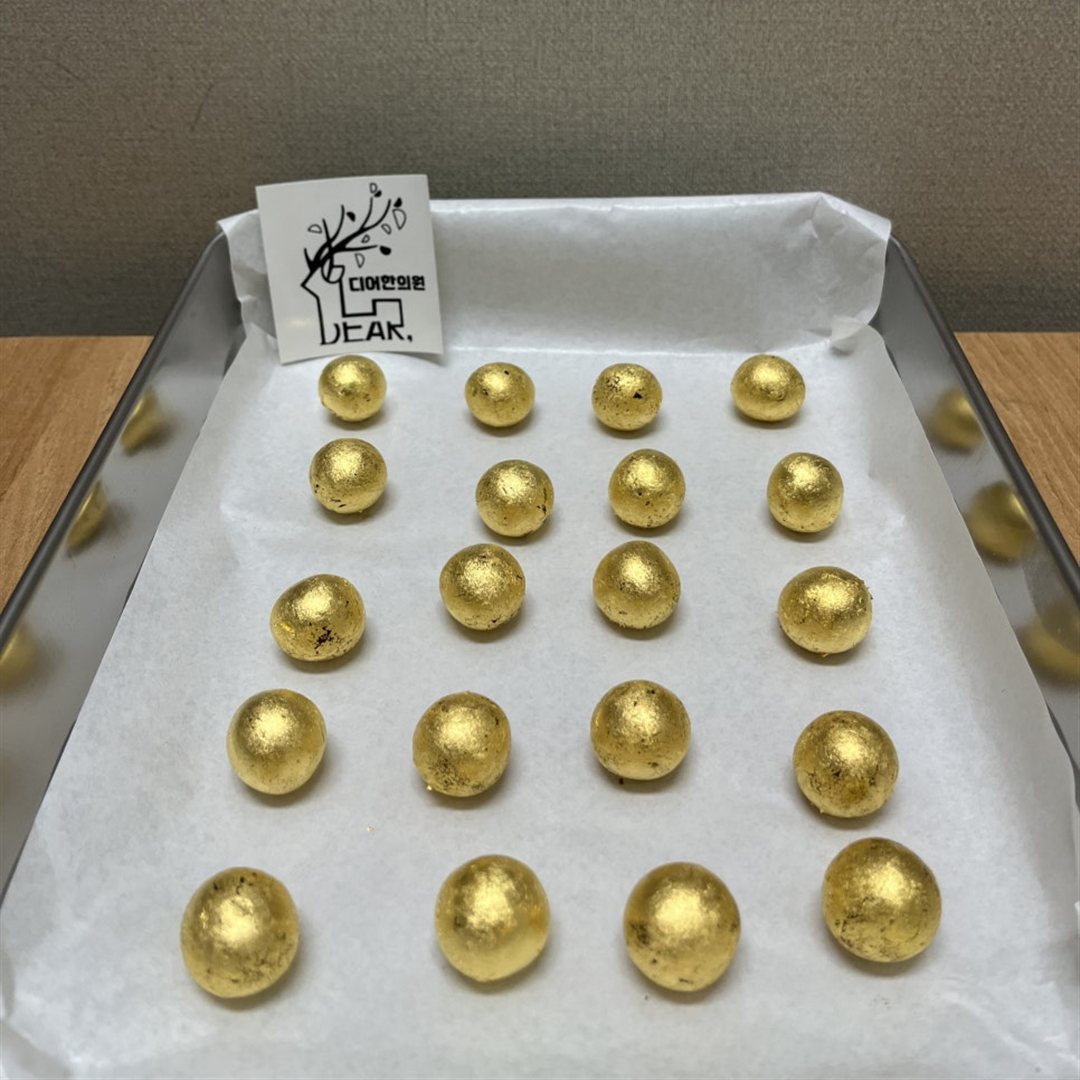
The word Gongjindan covers more than one thing. There is the formula written down in the Korean medical classics, made with musk. There are other versions made with agarwood in its place. And there are foods sold online under similar names such as gongjinhwan, because in Korea a food cannot carry the name of an herbal prescription. The three are not interchangeable, so the first thing to know about any Gongjindan is which of them it is.
INGREDIENTS
Gongjindan ingredients
The entry Korean medicine doctors call the original formula is in Dongui Bogam, the medical classic of the Joseon court, completed in 1610. It weighs out four ingredients: deer antler, Angelica root and Cornus fruit at four nyang each, and musk at five don, ground on its own. Nyang and don are traditional units of weight, and one nyang is ten don.1
- 40Deer antlernokyong · 鹿茸 · Cervi Parvum Cornu
- 40Angelica rootdanggui · 當歸 · Angelicae Gigantis Radix
- 40Cornus fruitsansuyu · 山茱萸 · Corni Fructus
- 5Musksahyang · 麝香 · Moschus
Weights in don, from the Dongui Bogam entry, as set out in a 2020 study of the formula.1
At DEAR each order is weighed to that ratio, and everything I compound under the name Gongjindan contains musk. The name itself is written 拱辰丹 and read Gongchen Dan in Chinese; in English you will also see Gong Jin Dan and Gongjin-dan.
BENEFITS
Gongjindan benefits, and who it is for
Dongui Bogam files the formula under depletion and describes the person it has in mind: someone in the prime of life whose vital energy is nonetheless faint, weak by constitution rather than worn down by illness.1 Over the centuries its use widened to bodies worn down along the way, and that is where I reach for it today: when someone cannot start the day without coffee, when rest no longer clears the tiredness, or when recovery after surgery or a serious illness is slow. It is a medicine for keeping a body going when short sleep has worn it down.
That last use has been tested. In a 2018 Korean trial, 23 healthy men were held to four hours of sleep, from 2 to 6 AM, for two nights, and took one Gongjindan pill or an identical-looking placebo before breakfast and dinner. In the first period of the trial, fatigue held level on Gongjindan while it climbed on placebo, on both questionnaires; across the whole trial, the men also found it easier to get to sleep on Gongjindan.2
Gongjindan differs from the herbal decoctions I prescribe in one respect that matters at the visit. A decoction is built around the body in front of me, with herbs added and taken out. Gongjindan keeps its fixed formula, so what I set for each person is the number of pills and how they are taken.
HOW TO TAKE IT
How to take Gongjindan
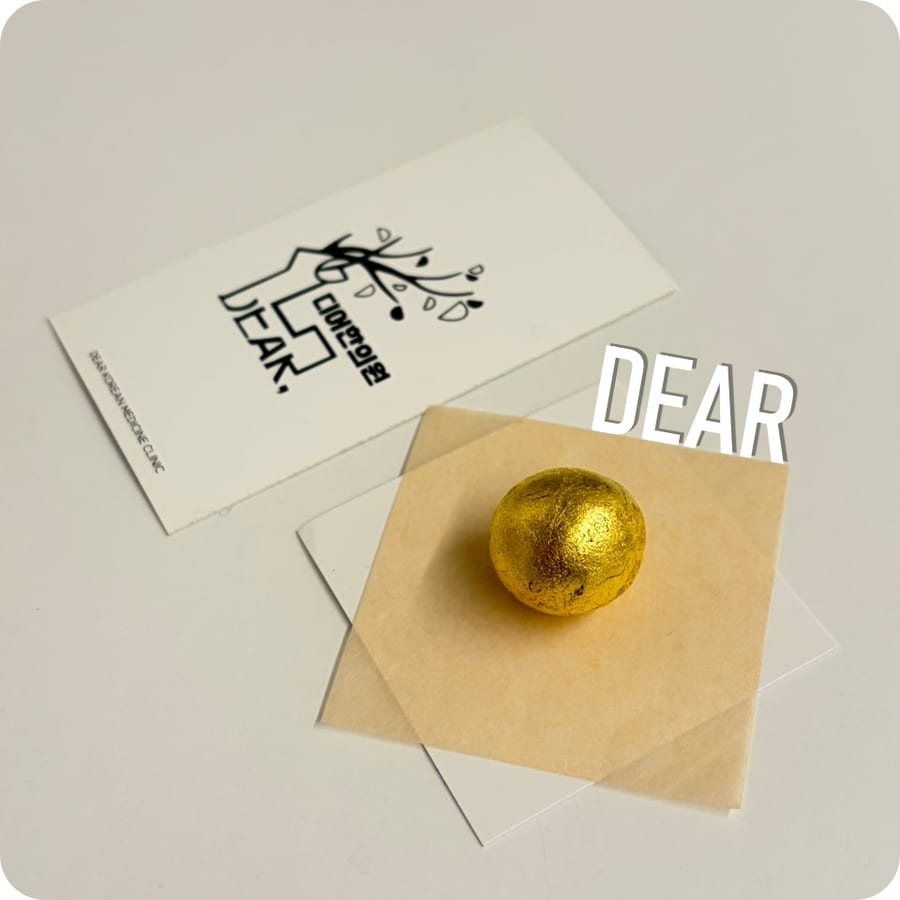
You do not wash Gongjindan down like a tablet. Chew it slowly, long enough for the taste of the ingredients and the aroma of the musk to open up, then swallow and drink a glass of warm water. As a rule, I have you take it on an empty stomach.
The 1610 entry had people take seventy to a hundred seed-sized pills at a time with warm wine or salted water.1 Today the formula is rolled into large pills. At DEAR each one is covered in gold leaf and sealed in a jar of its own, which keeps the musk from air and damp.
Your box comes with a written guide that sets out when to take the pills, for how many days, and how to store them.
SIDE EFFECTS
Gongjindan side effects, and what to tell me first
Two Korean trials tracked safety, and nothing serious happened to anyone taking Gongjindan in either.2 In the longer one, 90 adults with long-standing fatigue were followed for four weeks, and their blood tests stayed normal throughout.3
Before I compound yours, I need to know what your body is already dealing with. Tell me if you are pregnant or breastfeeding, if you are being treated for any condition, and which medicines and supplements you take, red ginseng included; the pharmacy bag itself is fine to bring. If your stomach is sensitive when empty, I change when you take it. And if you were given Gongjindan from somewhere else and are unsure about taking it, bring it in and we will look at it together.
WHERE TO BUY
Where to buy Gongjindan in Seoul, and four things to ask
In Korea, Gongjindan as an herbal medicine is compounded by a Korean medicine doctor at a clinic, for the person who will take it. A product bought from a shopping site is chosen from what has already been made. The difference that matters is whether you can find out who made it, when and where. Wherever you buy, four questions sort that out, and these are my answers.
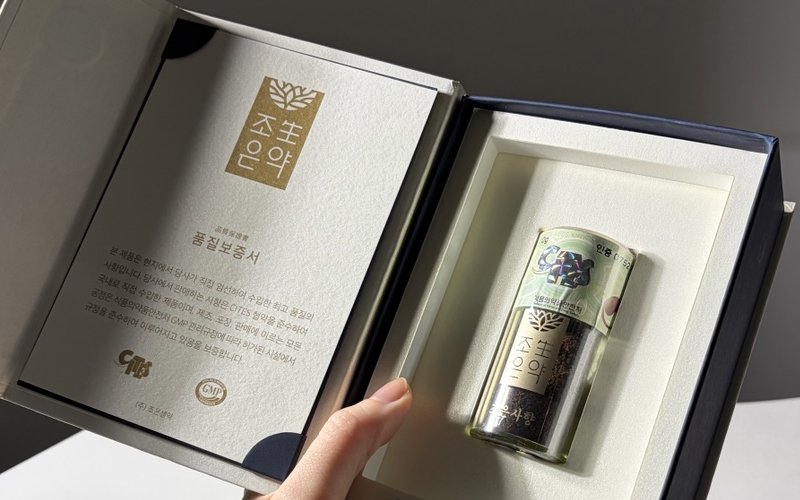
Is there musk in it, and how much?
Yes, in every pill, at the 1610 ratio of 5 parts in 125. It comes through the legal import route under CITES, the treaty that governs trade in wildlife products, and at the consultation I tell you how much goes into your pills and its content of muscone, musk's main active component.
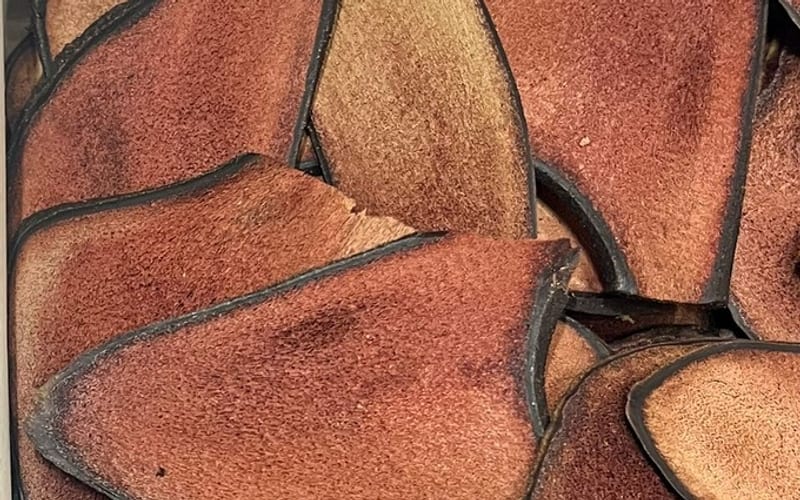
How were the ingredients checked?
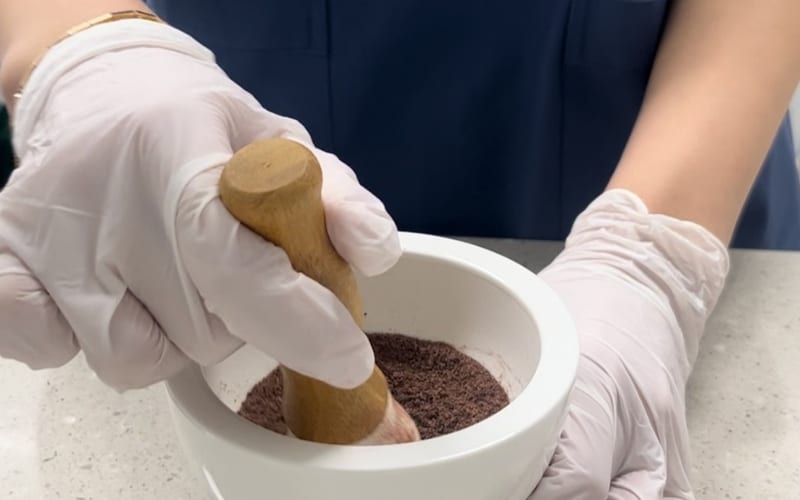
Musk arrives with its quality certificate, and I check it again before use. Deer antler comes in as antler, never as powder, with its import certificate, and I grind it here.
Who compounds it, and where?
I do, in the clinic, from grinding to rolling and packing. Nothing is sent out to be made.
When is it made?
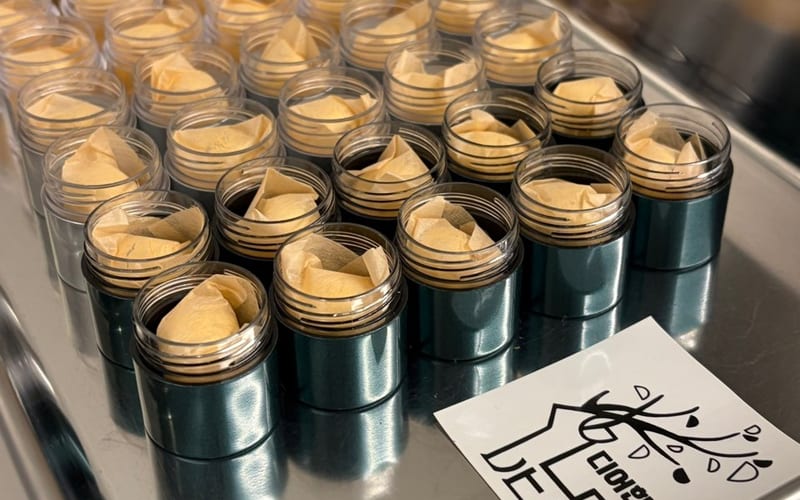
After you order. Pills made ahead give the musk's aroma time to fade, so I keep no stock: yours is made on its own, in an evening after clinic hours or on a weekend.
To order, send an Instagram DM or call, and tell me when you need it by; I will have it ready for that day. The consultation is in person, here in Seoul: I read your pulse, ask how you sleep, eat and digest, and decide the number of pills and the way you take them. Making an order takes a few days, so come in early in your trip, or let us ship it after you leave. We ship anywhere in Korea or overseas, so tell me where it is going when you book.
On price: Gongjindan is not covered by national health insurance, and what it costs from place to place turns on the same four things: whether musk is used and how much, the grade of the ingredients, how it is compounded and when. You hear DEAR's price at the consultation, once we know how many pills you need and before anything is made, and it is the same for Korean and international patients.
See DEAR Gongjindan, from the musk certificate to the finished box
Read what patients say about DEAR
THE LONGER READ
ONE NAME
Is it still Gongjindan without musk?
By name, yes; by formula, it is a different medicine. To see why, start with where the name comes from. It pictures the stars keeping their places around the North Star, and it is older than the Korean classic that made it famous: it first appears in a Southern Song formulary of 1196, passes through a Yuan dynasty text of 1345, and enters Dongui Bogam in 1610, which names that 1345 text as its source.1 What Korean medicine doctors now call the original formula is the 1610 entry, the one weighed out above.
As a 2020 study reads that entry, deer antler and musk are its two chief ingredients, and they work in opposite directions. Antler lifts; musk clears what is blocked and settles what has risen. Angelica root and Cornus fruit are there to feed and to hold what those two set moving.1 Change one of the two chief ingredients and the formula turns on a different axis.
That change has a history of its own. A Song dynasty book of 1227 already lists a formula of the same name made with agarwood,1 and a Korean formulary of 1869, Uibang Hwaltu, notes that agarwood or costus root is put in where musk would be, a variation carried on in Bangyak Happyeon in 1884.4 Both lines are old, and each stands as a prescription in its own right. They are different medicines, and the word Gongjindan on a label does not tell you which one is inside.
So the question to put to any Gongjindan is which one it is, and the four questions above answer it. Under my name, Gongjindan means the 1610 ratio, weighed out as written, with musk, and I tell you where that musk came from and what its muscone content is.
DEAR KOREAN MEDICINE CLINIC
About a 10-minute walk from Gangnam Station Exit 5 · +82-2-3486-1777
- Mon·Tue·Wed·Fri10:00–20:00
- Lunch13:00–14:00
- Thu14:00–20:00
- Sat10:00–15:00
- SunClosed
FAQ
Frequently asked questions
What does the name Gongjindan mean, and how is it written in Chinese?
It is written 拱辰丹 and read Gongchen Dan in Chinese. In English it also appears as Gong Jin Dan or Gongjin-dan. The name pictures the stars keeping their places around the North Star.
What are the ingredients of Gongjindan?
Deer antler, Angelica root, Cornus fruit and musk. The Dongui Bogam entry of 1610 sets them at 40, 40, 40 and 5 parts by weight, and at DEAR each order is weighed to that ratio.
What are the benefits of Gongjindan?
In Korea it is used to build a tired body back up. In a 2018 Korean trial of men kept to four hours of sleep for two nights, fatigue held level on Gongjindan while it climbed on placebo in the first period of the trial.
Does Gongjindan have side effects?
In two Korean trials, nothing serious happened to anyone taking Gongjindan, and blood tests stayed normal over four weeks. Before I compound yours, tell me if you are pregnant or breastfeeding, being treated for any condition, or taking medicines or supplements.
How do I take Gongjindan?
Chew it slowly instead of swallowing it whole, so the taste of the ingredients and the aroma of the musk open up, then drink a glass of warm water. As a rule it is taken on an empty stomach, and your own timing is written in the guide that comes with it.
Where can I buy Gongjindan in Seoul?
At a Korean medicine clinic, where a licensed doctor compounds it. DEAR is a 10-minute walk from Gangnam Station Exit 5, and I compound every order myself in the clinic.
How much does Gongjindan cost?
Prices differ from place to place with whether musk is used and how much, the grade of the ingredients, and how and when it is compounded. It is not covered by national health insurance. You hear DEAR's price at the consultation, before anything is made, and it is the same for Korean and international patients.
Can you ship Gongjindan overseas?
Yes. The consultation is in person, here in Seoul, and once your pills are ready we ship them anywhere in Korea or overseas. Tell me where they are going when you book.
Can I have my consultation in English?
Yes. I consult in English myself, and in Japanese and Chinese, so you won't need an interpreter.
How do I book?
Appointments are given priority, so we recommend booking before your visit. The most reliable way is an Instagram DM to @dearhani__, or you can call us at +82-2-3486-1777.
Sources
- Lim S, Jeong C, Jang W, Chu M, Baik Y. A study on the meaning of the Gongjin-dan formula, focusing on Dongui Bogam (in Korean). J Korean Med Classics. 2020;33(4):107–130.
- Son MJ, Im HJ, Ku B, et al. An herbal drug, Gongjin-dan, ameliorates acute fatigue caused by short-term sleep-deprivation: a randomized, double-blinded, placebo-controlled, crossover clinical trial. Front Pharmacol. 2018;9:479.
- Choi JY, Choi B, Kwon O, et al. Efficacy and safety of herbal medicine Gongjin-Dan and Ssanghwa-Tang in patients with chronic fatigue: a randomized, double-blind, placebo-controlled, clinical trial. Integr Med Res. 2024;13(1):101025.
- Lee M, et al. A study of the classical literature on putting agarwood or costus root in place of musk in Gongjin-dan (in Korean). Herbal Formula Science. 2015;23(2):235–243.
This column is general health information and does not replace an individual diagnosis or treatment. Results differ from person to person.