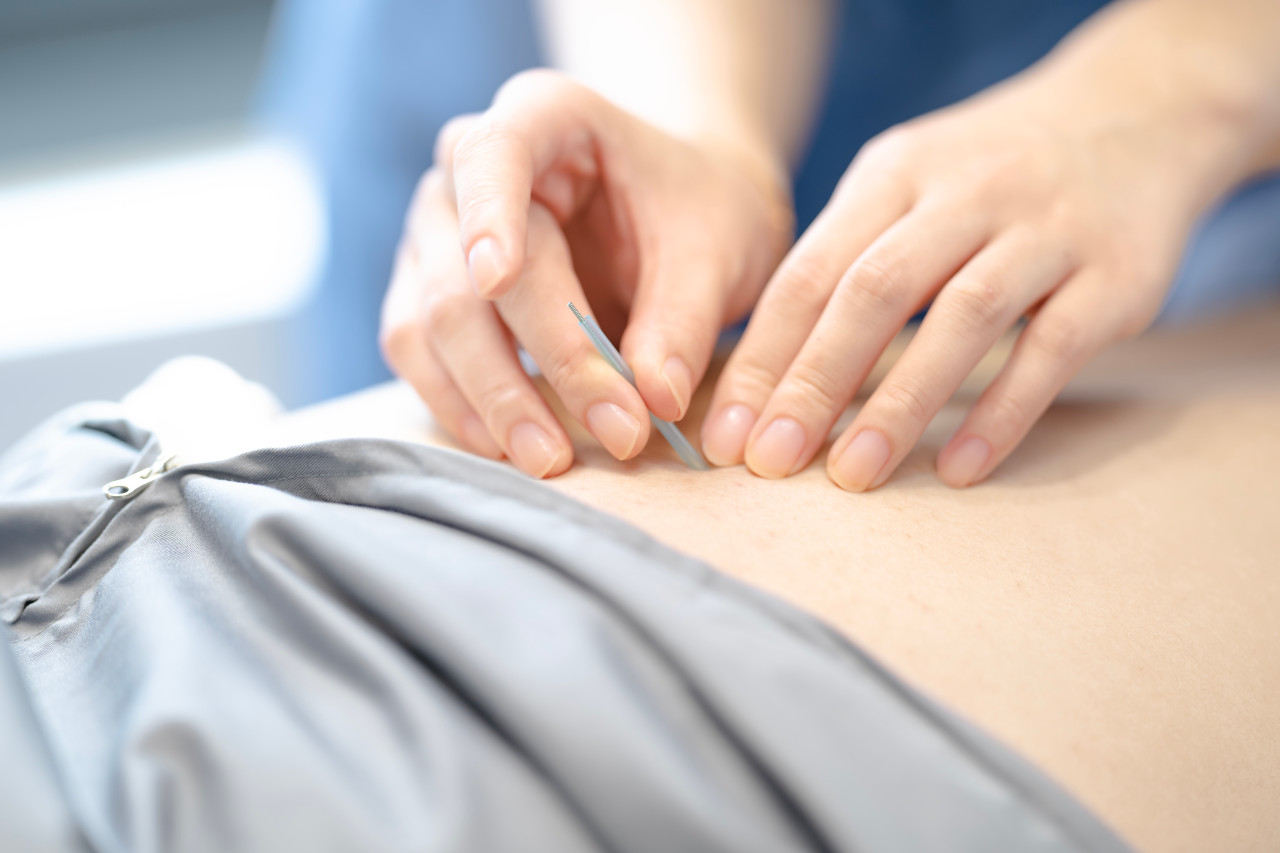
Back home, acupuncture may have meant a wellness studio, an hour-long appointment and a bill of around a hundred dollars. In Seoul it sits inside the national health system, next to your GP and your dentist, and it is done by a doctor.
That changes who you will see, what you will pay, and what a visit looks like from the moment you walk in.
THE DOCTOR
Who places the needles?
Korea has two medical professions that are licensed side by side: medical doctors and Korean medicine doctors. Korean medicine doctors train for six years at a college of Korean medicine and pass a national licensing exam, and acupuncture is part of that medical practice. There is more on how that system works in our guide to Korean medicine clinics in Seoul.
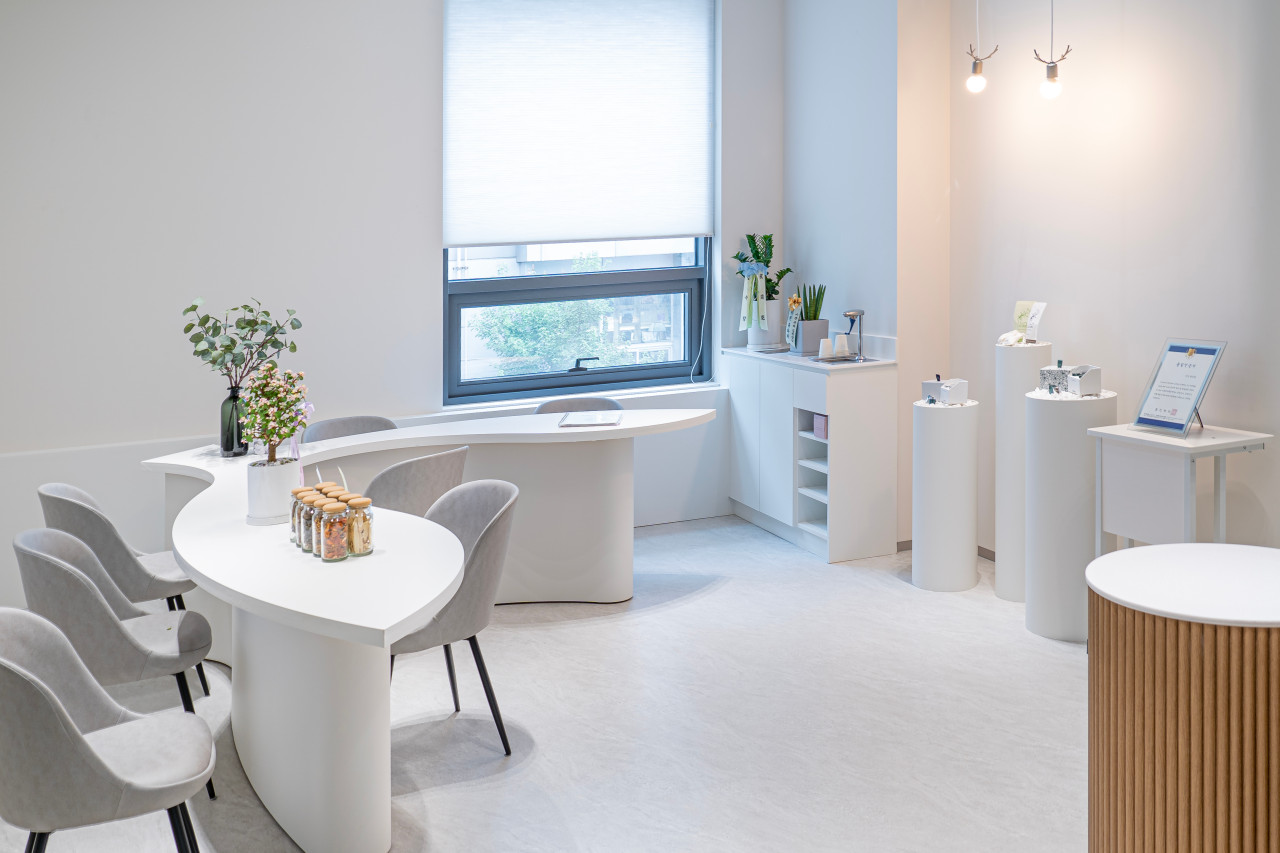
At DEAR, the person who examines you is the person who places the needles, at the first visit and every visit after. There is no coordinator in between.
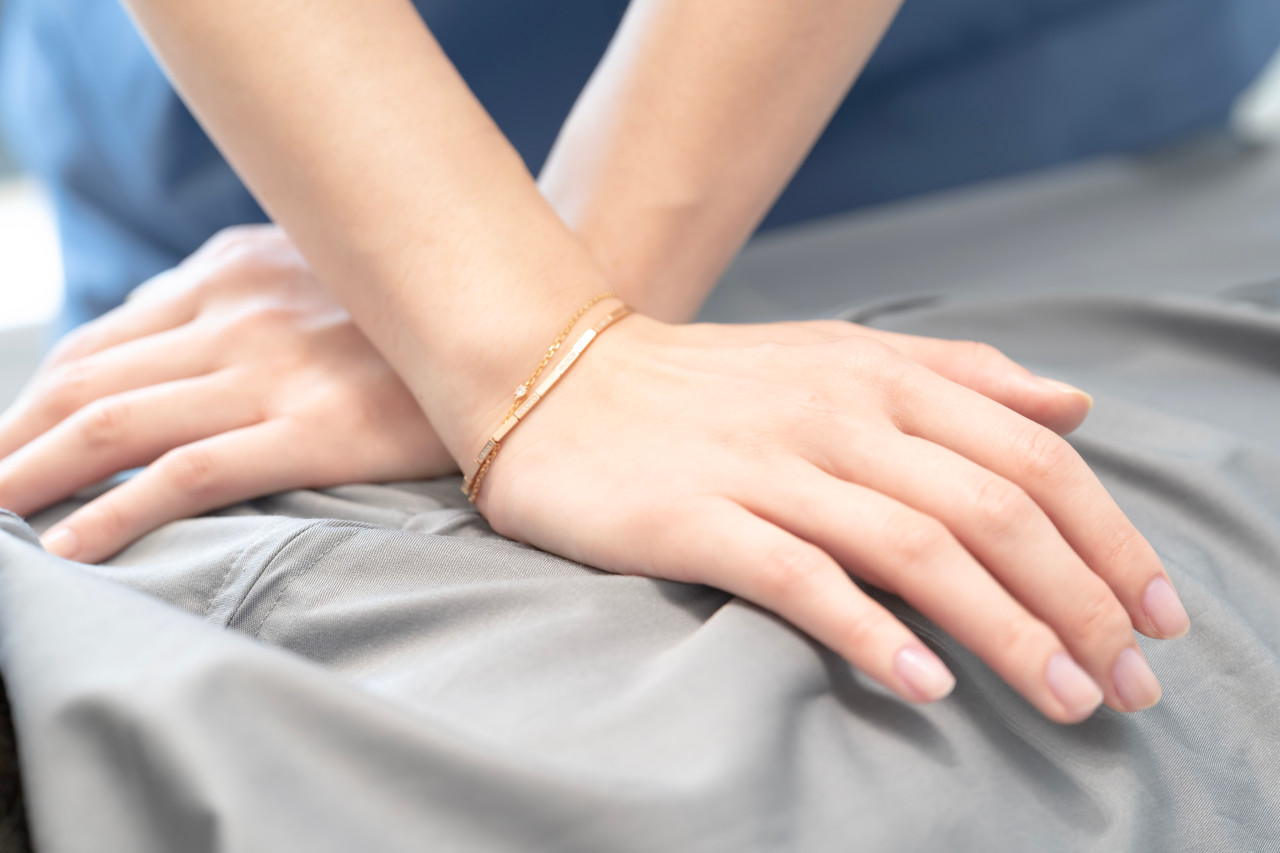
“My back hurts” covers a dozen different things. So the first visit starts with four questions: where exactly it hurts, which movements get stuck, whether numbness, headache or dizziness come with it, and how your sleep, digestion and stress have been.
The answers decide where the needles go, and they become the baseline I check against at every visit after.
AT DEAR
What happens at your first visit?
- Book in English
An Instagram DM is the easiest way. Appointments are given priority, so we recommend booking before your visit.
- A consultation with me
Where it hurts, which movements get stuck, what comes with it, and how you have been sleeping.
- Change and warm up
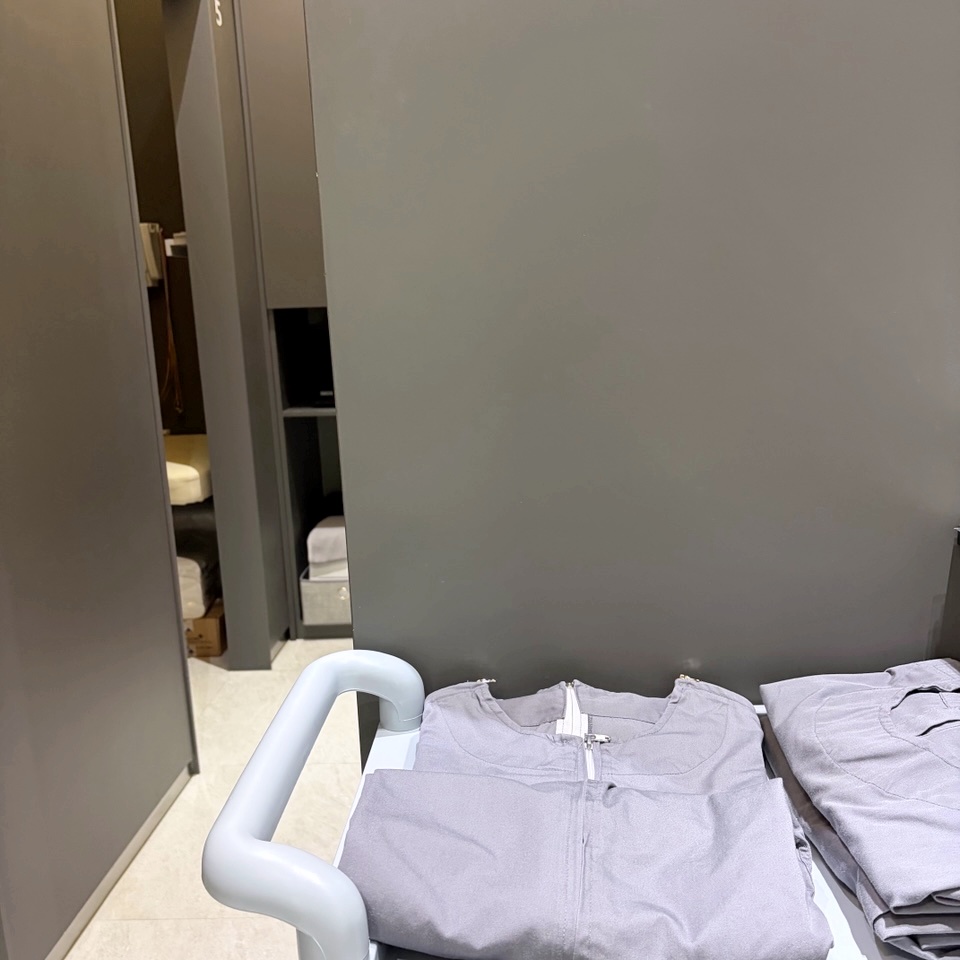
You change into a treatment gown. Heat and gentle electrical therapy loosen the area first.
- Acupuncture
Fine, single-use needles, left in for about fifteen minutes while you rest. Cupping or smoke-free moxibustion only if useful.
You feel a quick prick and then a dull, heavy sensation around the needle, which is what you want. You can move, talk or tell me to take one out at any point. When the needles come out, you can go straight back to your day.
COST
What does acupuncture cost in Seoul?
The difference is easiest to see in the bill. In the United States, a 2019 study of 723 clinics in 39 cities found a median out-of-pocket price of $112 for a first visit and $80 for each follow-up. In Korea, acupuncture, electro-acupuncture, cupping and moxibustion are national health insurance items, and their fees are set by the government, not by the clinic.
| United States (2019) | Seoul, with national health insurance | |
|---|---|---|
| Who sets the price | Each clinic | The government, through a national fee schedule |
| What you pay | Median $112 for a first visit, $80 for a follow-up, out of pocket | 30% of the national fee; the insurer covers the rest |
| Price for foreigners | — | The same as for Korean patients |
| Who places the needles | Usually a licensed acupuncturist | A licensed Korean medicine doctor |
If you live in Korea for six months or more, you are almost certainly enrolled; bring your residence card or passport, because clinics have to check your identity before applying insurance. If you are not enrolled, the same treatment is still charged at a fraction of those US prices, but without the insurance share.
Some treatments sit outside insurance, such as pharmacopuncture (herbal solutions injected at acupuncture points) and herbal medicine. If I think one of them would help, I will say what it costs before we start, and you are free to stay with acupuncture alone.
EVIDENCE
Does acupuncture actually help back and neck pain?
For chronic pain, acupuncture is one of the better-studied treatments in medicine, and the answer is yes.
Acupuncture beat both placebo needling and no acupuncture for chronic musculoskeletal pain, headache and osteoarthritis, and the effect lasted over time.
versus 27.4% with guideline-based drugs, physiotherapy and exercise, six months later.
Adding acupuncture to usual care reduced pain and disability clearly more than usual care alone, over three months.
In the German back-pain trial, people who received acupuncture were far more likely to improve than people on guideline-based standard care, and the difference was still there six months later. Across 39 trials and 20,827 patients, acupuncture also outperformed the placebo needling researchers use as a control, and the benefit lasted over time.
It was strong enough for the American College of Physicians. Its 2017 guideline lists acupuncture among the first treatments to try for chronic low back pain, alongside exercise, before reaching for medication. Serious side effects are rare, about one in 10,000 patients across prospective studies; the common ones are a small bruise or brief soreness where a needle went in.
ONE PHRASE, SEVERAL PROBLEMS
Is “my back hurts” one problem?
We use the same three words for very different events. Before any needle, the first job is to work out which one you have, because the plan, and sometimes the right building, depends on it.
Lifting a suitcase, twisting out of a taxi. A clear moment, pain that is sharp at first and settles over days to weeks. Here the aim is to calm the area and get you moving sooner.
Worse after long days at the desk, better at the weekend or on holiday. The pain follows a routine, so the routine is part of the treatment: how you sit, what your screen height is, how much tension sits in your shoulders.
Pain, tingling or numbness that runs below the knee points to an irritated nerve root. Acupuncture can still play a part, but I will want to know how far it travels and whether it is changing.
Many aches are a mixture: an old, routine-driven ache that flared after one bad movement. Sorting that out is what the first consultation is for.
TIME
Why do I ask when it hurts, not only where?
Pain keeps a schedule, and the schedule says a lot about the cause. Two people can point to the same spot on the lower back and have very different days.
Stiff for the first half hour, easing once you move?
Building the longer you sit, easing when you stand?
Worst in the evening, or better once you are home?
Gone by Saturday, back by Tuesday?
An example of the questions, not a diagnosis. The same approach applies to neck pain and headaches.
When someone tells me lying down helps, my next question is how long after getting up it starts again. Pain that returns an hour into the working day is a different story from pain that returns the moment you stand. With neck pain I separate three things: how far the neck turns, whether pressing the back of the neck and the trapezius reproduces the familiar pain, and when in the day it builds.
RHYTHM
Why is a session here shorter and more frequent than back home?
If you have had acupuncture in the US or UK, you may be used to a long appointment, often close to an hour, once a week. In Korea, acupuncture sits inside the national insurance system, and a visit is built differently. At DEAR it is a consultation, heat or electrical therapy, then needles left in for around fifteen minutes. Because each visit costs little, you can come more often.
The frequency is close to how the large trials were run: the German back-pain trial used ten sessions, usually twice a week. So compare a course with a course, not one session with one session: several shorter visits over a few weeks, with the plan adjusted as you go.
SESSIONS
How many sessions will I need?
Pain that has lasted for years rarely settles in one visit; in the neck-pain trial, people had up to fifteen sessions over three months.
For a mild, recent problem, a few sessions are often enough; how many depends on how quickly it eases between visits. At each visit I go back to the four things we checked the first time: where it hurts, which movements get stuck, what comes with it, and how you have been sleeping. If those are not moving, we change the plan rather than simply adding more of the same.
COMPARE
Is acupuncture the same as dry needling?
If you have had dry needling from a physiotherapist back home, the needles will look familiar. Both use the same solid, fine needles, and both work on tight muscles. Dry needling grew out of Western trigger-point therapy and usually targets the knot that hurts.
Acupuncture here starts from a wider picture. With neck pain or headaches, for example, I also check the back of the neck, the trapezius and upper back, and how you sit at your desk, because the sore spot is often not where the problem starts. That is also why a visit can include heat, cupping, pharmacopuncture or chuna, not only needles.
CHUNA
What if my back feels out of line?
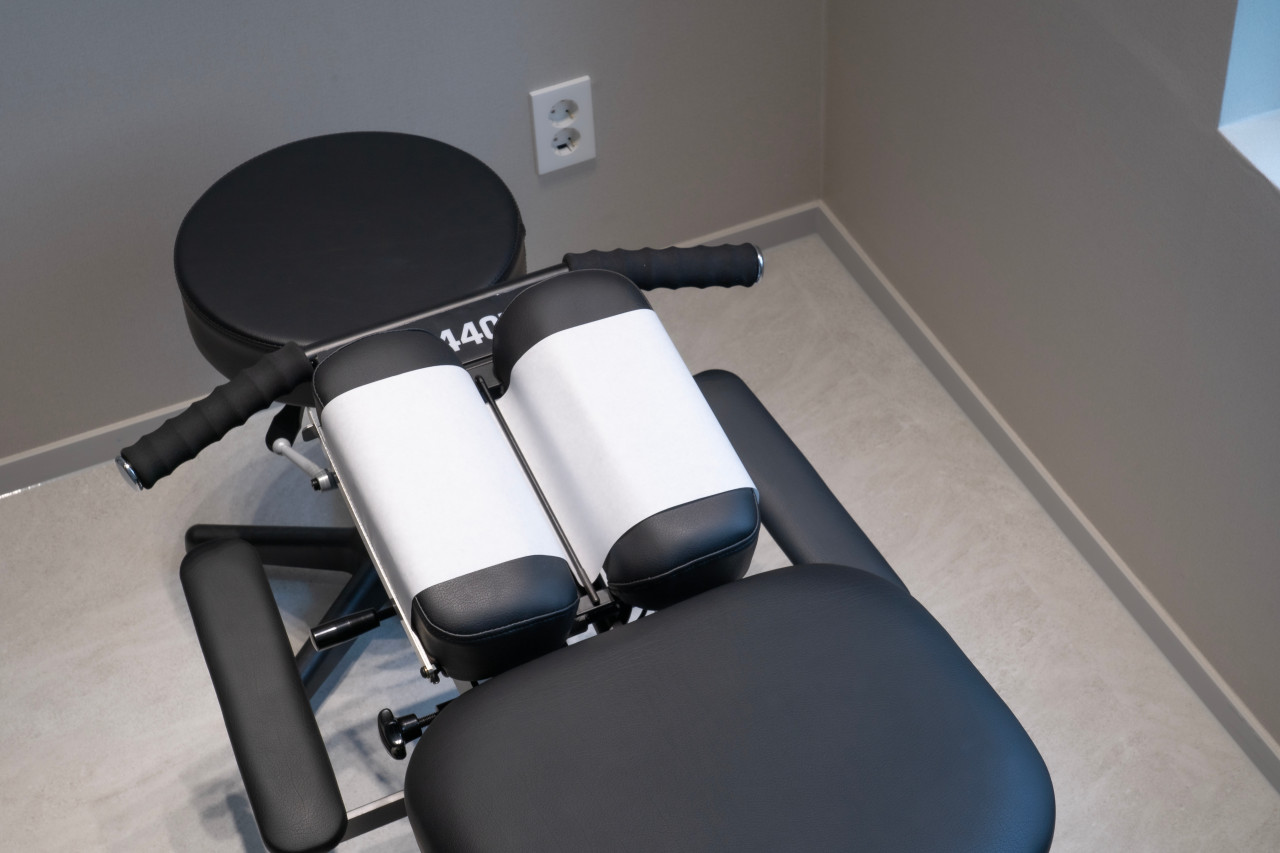
Chuna is a Korean manual therapy: the doctor uses hands to restore the balance of the spine, the joints and the muscles around them. Since 2019 it has been covered by national health insurance for musculoskeletal conditions, up to 20 sessions a year; ask us whether that applies to you.
At DEAR I perform chuna myself. Based on where it hurts and which movements get stuck, I use it together with acupuncture and pharmacopuncture.
After a car accident in Korea, treatment is billed to the car insurer instead. Bring the accident claim number and we take it from there.
HOURS & DIRECTIONS
When can I come?
Monday, Tuesday, Wednesday and Friday until 8 PM, so you can come after work. Thursday 2 PM to 8 PM, and Saturday 10 AM to 3 PM. We are closed on Sundays.
DEAR is at 3F, 143 Saimdang-ro, Seocho-gu, about a ten-minute walk from Gangnam Station Exit 5, in the same building as Starbucks. Parking is free for up to two hours. For a taxi, show the driver: 서울 서초구 사임당로 143.
If your back has been stiff since the move, or your neck gives out by Thursday, message us before it becomes the thing you plan your week around. I will see you myself, in English, and we will find where to start.
Read what patients say about DEAR
DEAR KOREAN MEDICINE CLINIC
About a 10-minute walk from Gangnam Station Exit 5 · +82-2-3486-1777
- Mon·Tue·Wed·Fri10:00–20:00
- Lunch13:00–14:00
- Thu14:00–20:00
- Sat10:00–15:00
- SunClosed
FAQ
Frequently asked questions
Does acupuncture hurt?
You feel a quick prick and then a dull, heavy sensation around the needle. The needles are hair-thin, and you can ask me to take one out at any point.
Is acupuncture covered by insurance in Korea?
Yes. Acupuncture, electro-acupuncture, cupping and moxibustion are covered by Korean national health insurance if you are enrolled. You pay 30% of a fee set by the government, the same at every Korean medicine clinic. Visitors without Korean insurance pay the uninsured fee, which we explain before treatment. Bring your residence card or passport.
What should I wear?
Anything you like. We have treatment gowns, and you change into one before treatment.
Can I have my consultation in English?
Yes. Director Minji Kim consults directly in English, Japanese and Chinese, so you won’t need an interpreter.
How do I book?
Appointments are given priority, so we recommend booking before your visit. The most reliable way is an Instagram DM to @dearhani__, or you can call us at +82-2-3486-1777.
Sources
- Fan AY, et al. Acupuncture price in forty-one metropolitan regions in the United States: an out-of-pocket cost analysis based on OkCopay.com. J Integr Med. 2019;17(5):315–320.
- Vickers AJ, et al. Acupuncture for chronic pain: update of an individual patient data meta-analysis. J Pain. 2018;19(5):455–474.
- Haake M, et al. German Acupuncture Trials (GERAC) for chronic low back pain: randomized, multicenter, blinded, parallel-group trial with 3 groups. Arch Intern Med. 2007;167(17):1892–1898.
- Witt CM, et al. Acupuncture for patients with chronic neck pain. Pain. 2006;125(1–2):98–106.
- Qaseem A, et al. Noninvasive treatments for acute, subacute, and chronic low back pain: a clinical practice guideline from the American College of Physicians. Ann Intern Med. 2017;166(7):514–530.
- Bäumler P, et al. Acupuncture-related adverse events: systematic review and meta-analyses of prospective clinical studies. BMJ Open. 2021;11(9):e045961.
- Zhou K, Ma Y, Brogan MS. Dry needling versus acupuncture: the ongoing debate. Acupunct Med. 2015;33(6):485–490.
- Kim H, Cheon C. Impact of health insurance coverage on Chuna Manual Therapy utilization. PLoS One. 2025;20(5):e0321488.
This article provides general health information and does not replace an individual diagnosis or treatment. Response to acupuncture varies from person to person.