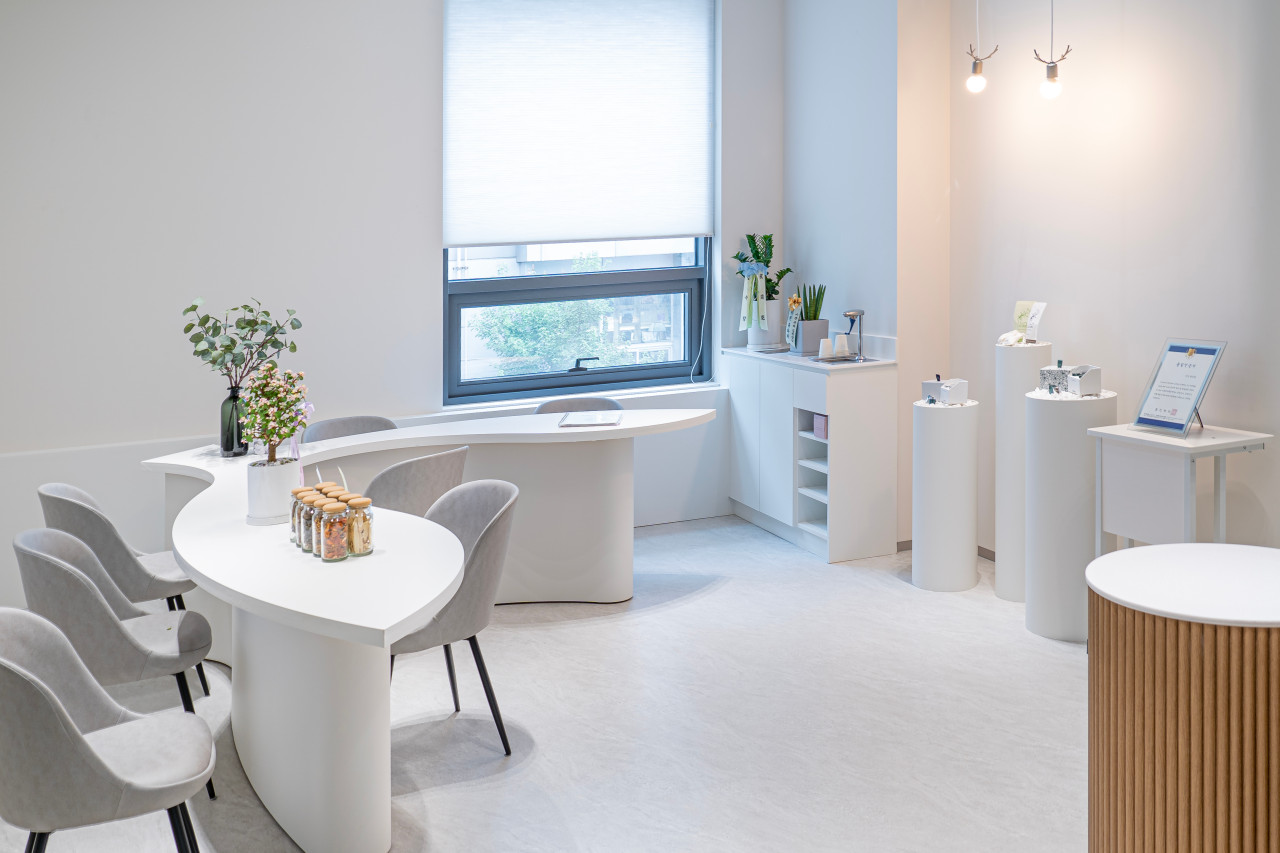
Someone at work tells you, “Just go to a hanuiwon for your back.” You search the map, find three within walking distance, and each one is a Korean sign above a door. The advice was well meant, and it leaves most of the useful questions unanswered.
“Korean medicine clinic” sounds like a single thing, and for someone who grew up in Korea it more or less is. For someone who did not, the phrase carries at least three separate questions: who the person treating you is, how you will be charged, and which problems belong there rather than somewhere else. Each has its own answer.
THE DOCTOR
Who will I actually see?
In many countries, acupuncture is offered by a practitioner with a separate, shorter qualification, or by a physician who added it to their training. Korea handles it differently. It has two medical professions that are educated, licensed and regulated side by side: medical doctors, and Korean medicine doctors (한의사, hanuisa). A Korean medicine clinic is opened and run by the second.
Two preparatory years and four main years at a college of Korean medicine.
Together they produce about 700 new Korean medicine doctors a year.
Graduates must pass a national exam to practise. Specialists train a further four years in hospital.
So the person placing the needles is the same person who takes your history, examines you and decides what to prescribe. Herbal prescriptions are written by that doctor, and at DEAR the herbs are also decocted inside the clinic. What a Korean medicine doctor does not prescribe are conventional pharmaceuticals such as antibiotics; those come from a medical doctor.
INSURANCE
What does national health insurance cover?
Korea’s national health insurance has covered acupuncture, moxibustion, cupping and some herbal preparations since 1987, which made it the first public insurance scheme to cover an entire traditional medicine system. Chuna, a manual therapy performed by the doctor, joined in 2019 for musculoskeletal conditions, up to 20 sessions a year.
Foreign residents usually join the scheme automatically. Since July 2019, anyone staying in Korea for six months or longer has had to enrol, and some groups, such as international students, enrol on arrival. If you are covered through your employer, you are already in. What catches people out is the counter: since May 20, 2024, clinics have to confirm a patient’s identity before applying insurance, so bring your residence card or passport, or have the NHIS mobile certificate ready.
One room, then, holds two ways of paying.
| Covered by national health insurance | Not covered | |
|---|---|---|
| Typical examples | Consultation, acupuncture, electro-acupuncture, moxibustion, cupping; chuna for musculoskeletal conditions | Custom herbal decoctions, pharmacopuncture, gongjindan, most certificates |
| How the price is set | By the national fee schedule, so the same item costs the same at any Korean medicine clinic. You pay the patient’s share. | By each clinic, and every clinic has to publish its non-covered fees |
| At DEAR | Applied when you show valid ID and are enrolled | Explained during the consultation, before any treatment. Same for Korean and international patients. |
Herbal decoctions have traditionally sat outside national insurance. Since November 2020, a government pilot has covered them for a small list of specific conditions at participating clinics, but outside those conditions a custom prescription remains a non-covered item. At DEAR, herbal medicine is non-covered, and I tell you what it will cost before we decide on anything.
If you also carry private or travel insurance from home, I can issue a certificate of treatment in English. Insurers differ in what they ask for, so check their list before your visit and tell us at the start.
WHERE TO GO
What do people come to a Korean medicine clinic for?
A hanuiwon suits problems that have been going on for a while: a neck that stiffens by Thursday, sleep that breaks at three in the morning, a stomach that has been unsettled since the move to Seoul. These are the conditions where an hour of listening and a treatment plan over several weeks fit well. At DEAR, I treat:
- Pain · neck, back, shoulder and joint discomfort
- After a car accident · pain and recovery
- Sleep and tension · insomnia, stress, panic and a racing heart
- Digestion · bloating, heartburn, a sensitive stomach
- Fatigue · low energy and slow recovery
- Weight · our BE DEER herbal program
- Postpartum recovery · tonics and swelling after birth
- Children’s growth and exam-season condition
Herbal medicine is not always the answer either; for a mild problem, a few sessions of acupuncture are often enough.
AT DEAR
What happens during a first visit?
- Book ahead
An Instagram DM or a phone call. Appointments are given priority, so we recommend booking before your visit.
- A consultation with me
In English, at the first visit and at every follow-up. There is no coordinator in between.
- Checks if needed
For herbal medicine, a questionnaire, your height and a body composition reading before anything is prescribed.
- Treatment
Electrical or heat therapy, then acupuncture, with the needles left in for about fifteen minutes. Moxibustion here is smoke-free.
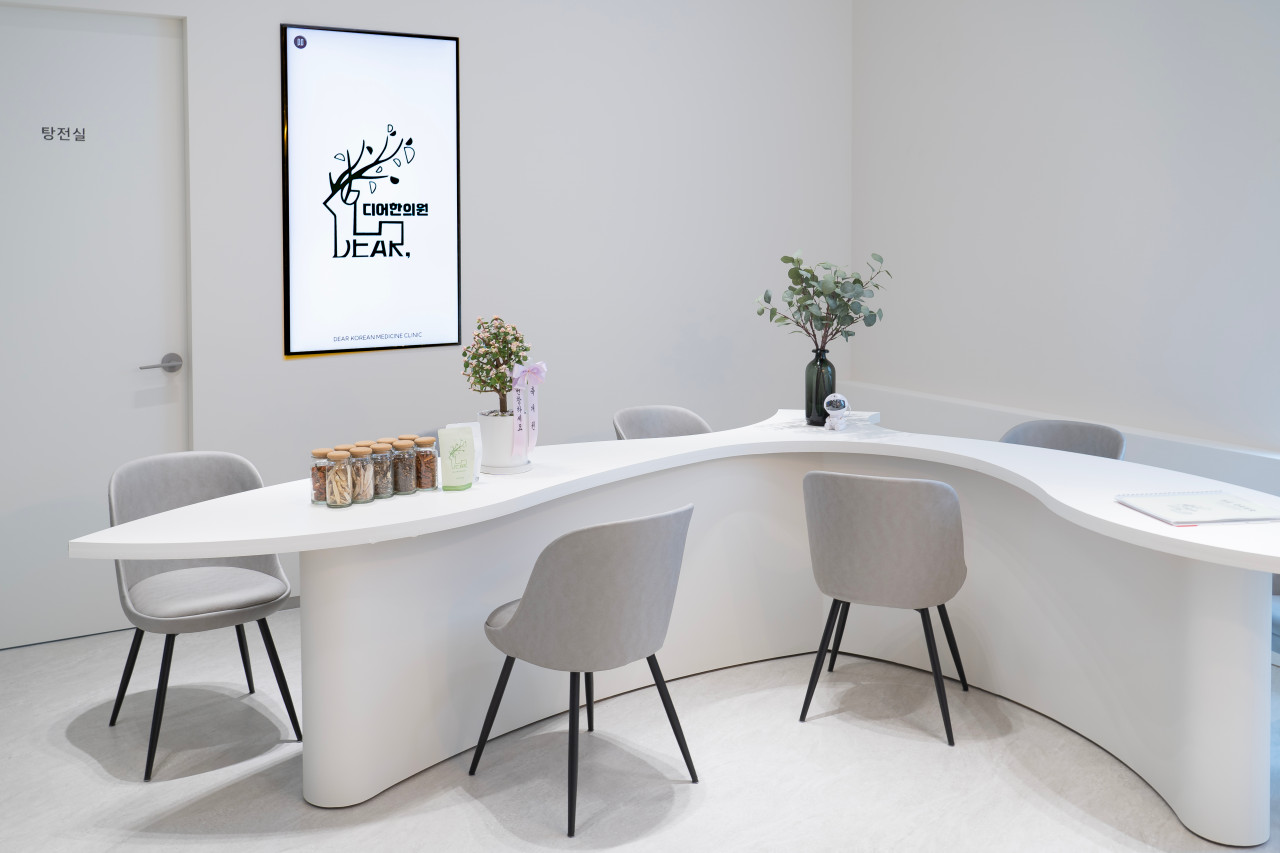
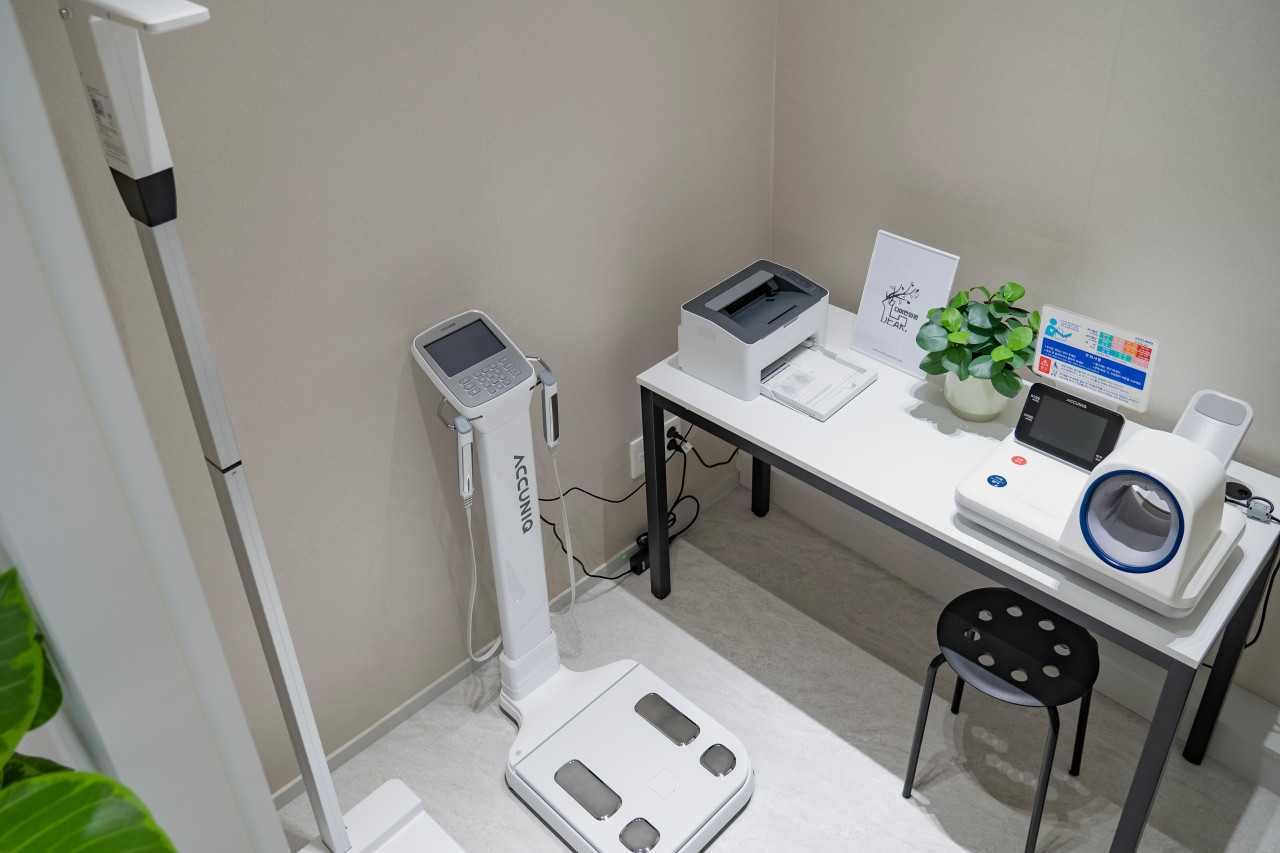
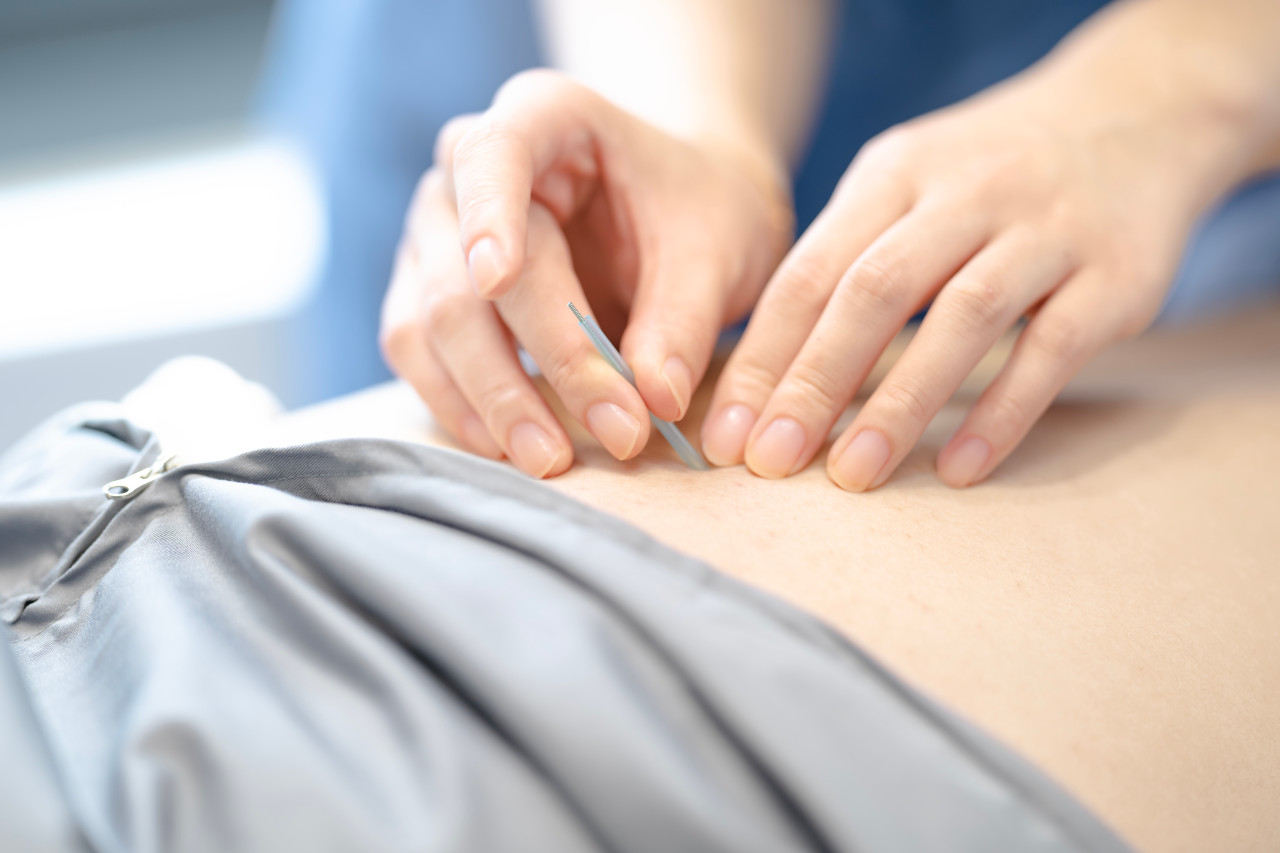
The consultation is where most of the visit happens. I ask when the problem started, what makes it better or worse, how you sleep and eat, and what you have already tried. For a first herbal consultation this often takes an hour or longer. The treatment is shaped by that conversation.
HERBAL MEDICINE
Will I be talked into a long course of herbal medicine?
It is a fair worry. “Package” is a word many newcomers to Seoul have learned to be wary of, from skin clinics to gyms. I do not recommend anything I would not take or undergo myself, and I would rather suggest a few acupuncture sessions than a month of herbs for a problem that does not need them.
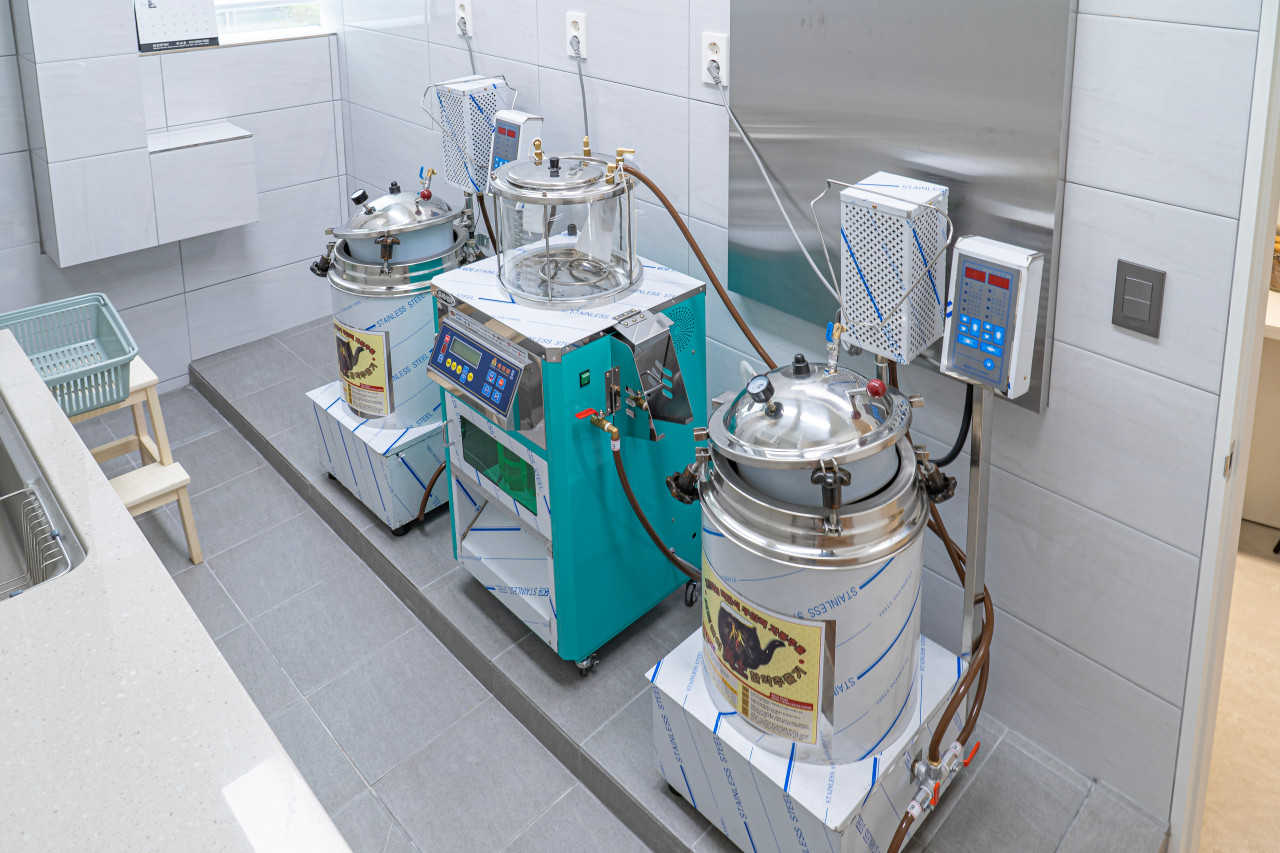
When herbal medicine does make sense, I prescribe for the person in front of me after the consultation and the checks above. The herbs are Korean-grown and meet the Ministry of Food and Drug Safety standard for herbal medicines, and the decoction is made in the clinic rather than sent out.
I review the prescription about every fifteen days. How you felt over those two weeks decides what happens next, including stopping.
LANGUAGE & DIRECTIONS
Do I need to speak Korean, and how do I find you?
You do not need Korean for the consultation or the treatment. I consult in English, Japanese and Chinese. The front desk works mainly in Korean, so booking by Instagram DM is the easiest route; a phone call works too.
DEAR is at 3F, Rooms 309–310, 143 Saimdang-ro, Seocho-gu, between Gangnam and Gyodae stations, about a ten-minute walk from Gangnam Station Exit 5. We are in the same building as Starbucks; either elevator takes you to the third floor. Parking is free for up to two hours. For a taxi, show the driver the Korean address: 서울 서초구 사임당로 143.
So, back to “just go to a hanuiwon for your back.” Who you will see, how you will be charged and whether this is the right door are three questions, and they are best asked in that order. If your back, your sleep or your stomach has brought you here, I will see you myself, in English, and we will work out together where to start.
Read what patients say about DEAR
DEAR KOREAN MEDICINE CLINIC
About a 10-minute walk from Gangnam Station Exit 5 · +82-2-3486-1777
- Mon·Tue·Wed·Fri10:00–20:00
- Lunch13:00–14:00
- Thu14:00–20:00
- Sat10:00–15:00
- SunClosed
FAQ
Frequently asked questions
Is acupuncture covered by Korean national health insurance?
Yes. Acupuncture, moxibustion, cupping and some herbal preparations have been covered since 1987. If you are enrolled in national health insurance, bring your residence card or passport, because clinics must check your identity before applying insurance.
Is herbal medicine covered?
Custom herbal decoctions have traditionally sat outside national insurance. At DEAR, herbal medicine is a non-covered service, and the fee is explained during your consultation, before anything is prescribed.
Can I get a document in English for my insurer?
Yes. I can issue a certificate of treatment in English. Let us know at the start of your visit which documents your insurer asks for.
Can I have my consultation in English?
Yes. Director Minji Kim consults directly in English, Japanese and Chinese, so you won’t need an interpreter.
How do I book?
Appointments are given priority, so we recommend booking before your visit. The most reliable way is an Instagram DM to @dearhani__, or you can call us at +82-2-3486-1777.
Sources
- National Institute for Korean Medicine Development (NIKOM). Korean Medicine education system.
- Lim B. Korean medicine coverage in the National Health Insurance in Korea: present situation and critical issues. Integr Med Res. 2013;2(3):81–88.
- Kim H, Cheon C. Impact of health insurance coverage on Chuna Manual Therapy utilization: a cross-sectional analysis using data from the 2017 and 2020 Korean Medicine Utilization and Herbal Medicine Consumption Survey. PLoS One. 2025;20(5):e0321488.
- Kim S-D, et al. Herbal medicine evaluation for reimbursement-based facial palsy (HERB-FP): a retrospective analysis using Korean health insurance claim data 2020–2024. BMC Complement Med Ther. 2025;25:307.
- Korea.net. All foreign residents must get nat’l health insurance from July 16. June 13, 2019.
- Seoul Metropolitan Government. Don’t forget to bring your ID to hospitals and clinics, starting from May 20, 2024.
This article provides general information and does not replace an individual diagnosis or treatment. Insurance rules change; the National Health Insurance Service has the final word on your own eligibility.