Korean has an everyday word for a meal that will not go down: che (체), as in chehaetda, "it's stuck." You hear it after a rushed lunch or a long company dinner, and in plenty of Korean homes someone still pricks a fingertip to bring it down. The Chinese character behind it, 滯, means blocked and stagnant, which is a fair description of how it feels.
For some people che is a once-a-year event after a feast. For others it comes back several times a month, the endoscopy is normal every time, and digestive tablets have become part of the week. This column is for the second group. The first thing I ask is where it sits, because fullness, pain and burning point to different problems and are treated differently.
WHERE IT SITS
Indigestion, bloating or heartburn: which one is yours?
- Full after a few bites
A heavy, stretched middle that lasts long after the meal, or fullness that stops you halfway through it. Bloating and belching come with it.
Postprandial distress - Pain in the pit of the stomach
A gnawing or burning spot just below the breastbone, on an empty stomach or after eating.
Epigastric pain - Burning behind the breastbone
Heat rising up the chest and a sour or bitter taste in the mouth, worse after a big meal or lying down.
Reflux
Drawn for this column. The first two are the two kinds of functional dyspepsia in the Rome IV criteria;1 reflux is its own condition and often comes along with them.
When the fullness or the pain in the pit of the stomach keeps coming back and an endoscopy finds nothing to explain it, the condition is called functional dyspepsia.1 "Functional" does not mean imagined. It means the stomach looks normal and still does not work the way it should, which is a problem of movement and sensation that a camera cannot see.
Time matters as much as place. One che after a heavy meal is a bad evening. When it comes back several times a month, or you reach for digestive tablets two or three times a week, the stomach is telling you something about how it handles food every day, and that is the point to have it treated.
AT DEAR
Korean medicine for indigestion, at DEAR
The first visit starts with questions. When it began and how often it happens; whether fullness, pain or burning leads; how much you can eat at one meal and whether your weight has changed; whether reflux, nausea, bloating or a change in your bowels comes with it; what an endoscopy or earlier tests showed; which stomach medicines you have tried and what they did; and how sleep, stress and, for women, the menstrual cycle affect it.
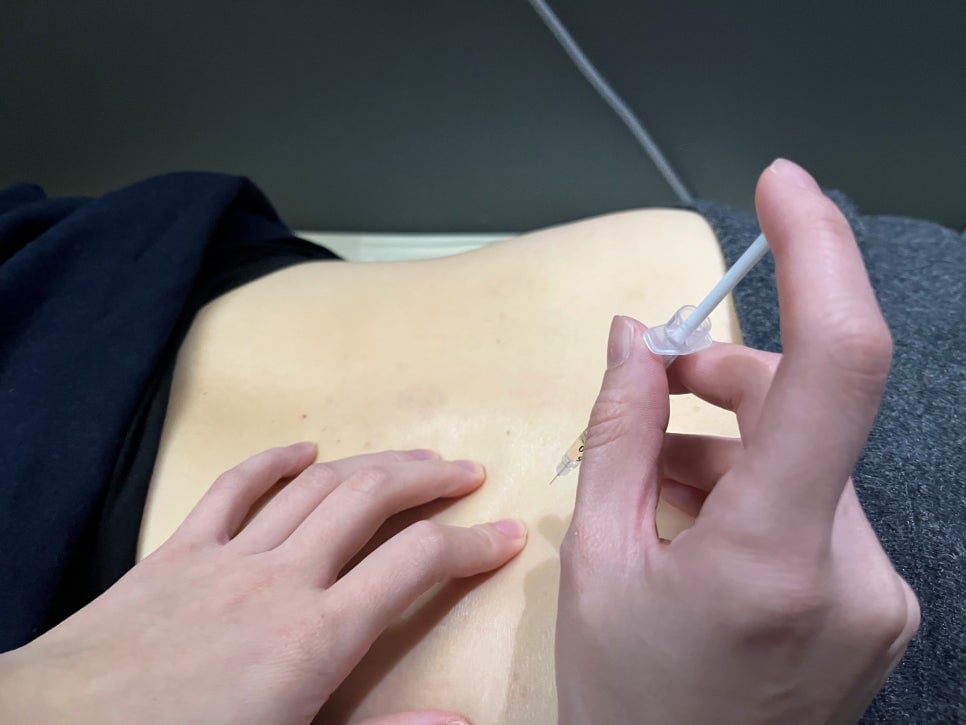
Then I press on your stomach. Whether the pit of the stomach is hard, whether the abdominal muscles are pulled tight like a band, where it hurts under my fingers: I place the needles for what I find there that day. Acupuncture is the core, with pharmacopuncture, a small dose of herbal extract given at an acupuncture point, and gentle electrical or ultrasound stimulation when they help. The feeling of food stuck, fullness after meals and pain in the pit of the stomach often change within a few sessions.
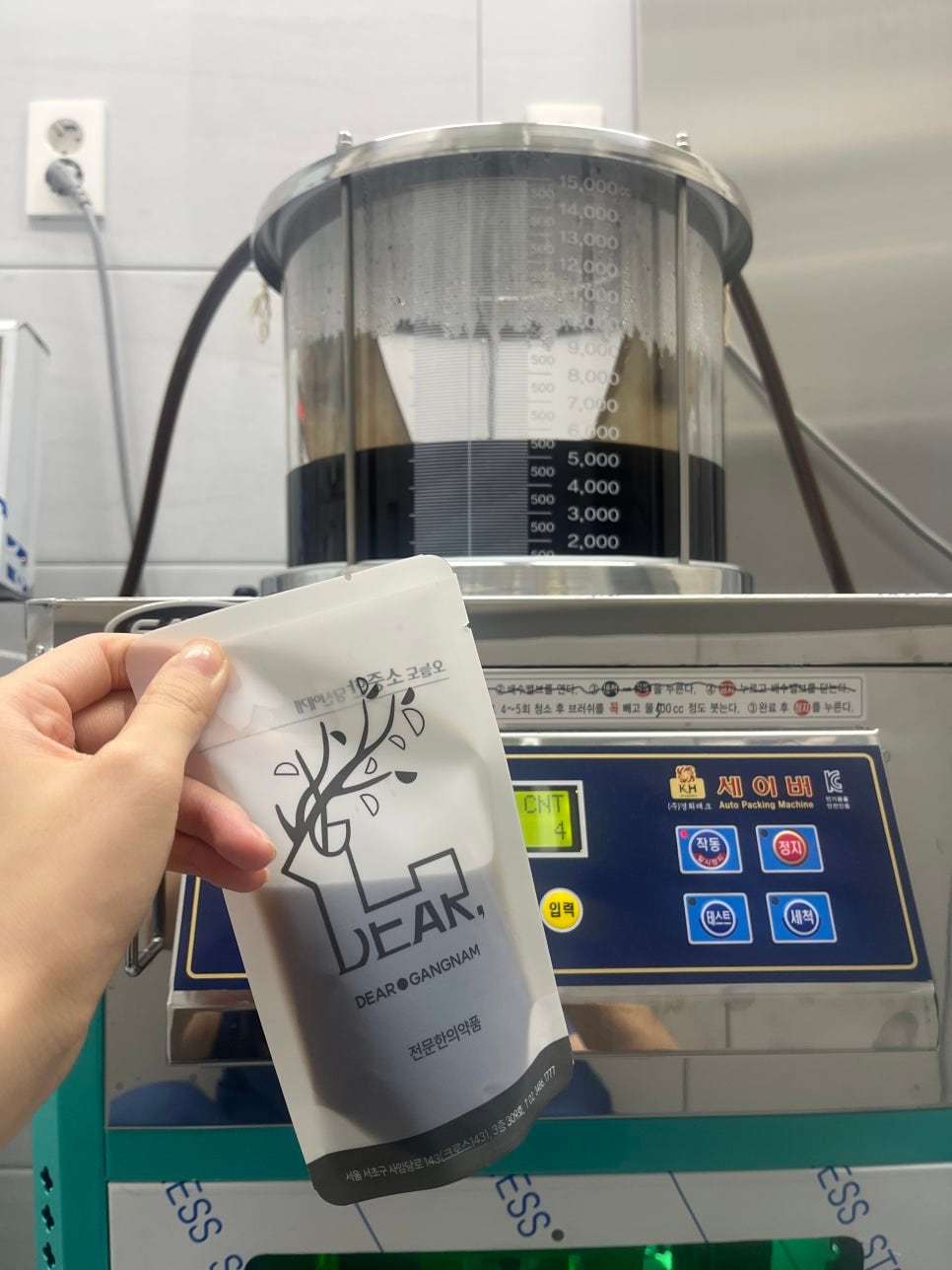
When the indigestion keeps returning, I add herbal medicine, prescribed for what bothers you most. When fullness leads, the prescription helps the stomach move food along; when it only happens under stress, it eases tension and calms the nervous system. It is brewed in our own decoction room and given as fifteen days of pouches, and when you come back I rewrite the prescription to match how much has changed.
Rather than asking whether your digestion "feels better," I keep track of what can be counted: how much you can eat at one meal, how long the discomfort lasts after it, and how many times a week the pain comes. You do not need to stop any medicine you are taking. Bring the names, and I check how they fit with the herbal medicine.
THE LONGER READ
A NORMAL ENDOSCOPY
Why does indigestion come back when the endoscopy is normal?
A normal endoscopy tells you there is no ulcer, no inflammation, nothing growing. It does not tell you how the stomach moves. When food arrives, the upper part of a healthy stomach relaxes and widens to make room for it. If it widens too little, a small meal fills it, and you feel full long before you have eaten much. In a Belgian study of 40 people with indigestion and normal tests, the stomach was measured from the inside with a small balloon, and in about four in ten this relaxation fell short.2 An Italian study of 343 people with functional dyspepsia found a different fault in one in three: the stomach emptied solid food more slowly than it should.3
Stress reaches into the same machinery. When healthy volunteers were made anxious in the lab, the room their stomachs made for a meal shrank from 157 mL to 100 mL.4 So when a Korean coworker says, "I get che whenever I'm stressed," that is a fair account of what the stomach is doing. It also explains why a stomach pill aimed at acid can quiet the burning and leave the fullness untouched: acid is one part of the problem, and the movement of the stomach is another.
THE RESEARCH
Can acupuncture help with indigestion?
A trial at five hospitals in China followed 278 adults whose main trouble was fullness after meals. Those given twelve acupuncture sessions over four weeks were compared with a control group, so that the effect of the needles could be told apart from the visit itself. After four weeks, 83% of the acupuncture group reported improvement, well ahead of the control group, and the benefit held through twelve weeks after the sessions ended. No serious adverse events were recorded.5
For herbal medicine, a 2022 analysis gathered fifteen trials that compared herbal formulas with a placebo. At eight weeks, for every 100 people treated, 20 more improved overall on herbal medicine than on the placebo, a difference the authors judged large enough to matter to patients.6 The formulas differed from trial to trial, which is how Korean medicine works in practice too: the prescription follows what is wrong with the stomach in front of me.
BETWEEN VISITS
What helps between visits
Slow down. In a Korean study of 89 young women, ten of the eleven who had indigestion finished their meals in under 13 minutes; among those without it, half did.7 Seoul lunch hours are not built for slow meals, which is exactly why a slower lunch is the first habit to protect.
Walk after eating instead of lying down. When ten healthy men ate the same meal, it took 73 minutes for half of it to leave the stomach if they stood still and 45 minutes if they walked slowly.8 A slow lap around the block after lunch counts.
And on a day your stomach feels blocked, leave out fatty food first, because fat slows how fast the stomach empties.9 If it keeps happening, come in and tell me what you ate and where it sat. I will find the rest when I examine your stomach.
Read what patients say about DEAR
DEAR KOREAN MEDICINE CLINIC
About a 10-minute walk from Gangnam Station Exit 5 · +82-2-3486-1777
- Mon·Tue·Wed·Fri10:00–20:00
- Lunch13:00–14:00
- Thu14:00–20:00
- Sat10:00–15:00
- SunClosed
FAQ
Frequently asked questions
Can acupuncture help with indigestion?
In a trial of 278 adults whose main trouble was fullness after meals, 83% of those given twelve acupuncture sessions over four weeks reported improvement, well ahead of a control group, and the benefit held for twelve weeks after the sessions ended. At DEAR I choose the points from what I find when I press on your stomach that day.
What does che mean in Korean?
Che (체) is the everyday Korean word for food that will not go down, from a character that means to be blocked and to stay. Koreans say chehaetda after a rushed or heavy meal, and the same word covers fullness, bloating and pain in the pit of the stomach.
Is Korean medicine for indigestion covered by insurance?
Acupuncture is covered by Korean national health insurance if you are enrolled, so you pay 30% of a fee set by the government. Visitors without Korean insurance pay the uninsured fee, explained before treatment. Pharmacopuncture and herbal medicine are not covered; we tell you the price during the consultation, before anything is made, and it is the same for Korean and international patients.
Can I keep taking my stomach medicine?
Yes. You do not need to stop anything before your visit. Bring the names of the medicines you take, and I check how they fit with the herbal medicine and how far apart to take them.
How soon will I notice a difference?
Fullness, the feeling of food stuck in the stomach and pain in the pit of the stomach often change within a few acupuncture sessions. Herbal medicine is given fifteen days at a time, and at each return visit I adjust the prescription to how much has changed.
Can I come in the same day my stomach feels blocked?
Yes. I examine your stomach and place needles for that day's symptoms. We are open until 8 PM on Monday, Tuesday, Wednesday and Friday, so you can come after work.
It feels like indigestion, but my chest is tight and I am sweating. What should I do?
Call 119. Korea's disease control agency warns that a heart attack can be mistaken for acute indigestion, and chest tightness with a cold sweat is not something to wait out.
Can I have my consultation in English?
Yes. I consult in English myself, and in Japanese and Chinese, so you won't need an interpreter.
How do I book?
Appointments are given priority, so we recommend booking before your visit. The most reliable way is an Instagram DM to @dearhani__, or you can call us at +82-2-3486-1777.
Sources
- Stanghellini V, Chan FK, Hasler WL, et al. Gastroduodenal disorders (Rome IV). Gastroenterology. 2016;150(6):1380–1392.
- Tack J, Piessevaux H, Coulie B, Caenepeel P, Janssens J. Role of impaired gastric accommodation to a meal in functional dyspepsia. Gastroenterology. 1998;115(6):1346–1352.
- Stanghellini V, Tosetti C, Paternico A, et al. Risk indicators of delayed gastric emptying of solids in patients with functional dyspepsia. Gastroenterology. 1996;110(4):1036–1042.
- Geeraerts B, Vandenberghe J, Van Oudenhove L, et al. Influence of experimentally induced anxiety on gastric sensorimotor function in humans. Gastroenterology. 2005;129(5):1437–1444.
- Yang JW, Wang LQ, Zou X, et al. Effect of acupuncture for postprandial distress syndrome: a randomized clinical trial. Ann Intern Med. 2020;172(12):777–785.
- Ho L, Zhong CC, Wong CH, et al. Herbal medicine for functional dyspepsia: network meta-analysis of placebo-controlled randomised trials. J Ethnopharmacol. 2022;283:114665.
- Sinn DH, Shin DH, Lim SW, et al. The speed of eating and functional dyspepsia in young women. Gut Liver. 2010;4(2):173–178.
- Moore JG, Datz FL, Christian PE. Exercise increases solid meal gastric emptying rates in men. Dig Dis Sci. 1990;35(4):428–432.
- Stacher G, Bergmann H, Gaupmann G, et al. Fat preload delays gastric emptying: reversal by cisapride. Br J Clin Pharmacol. 1990;30(6):839–845.
- Korea Disease Control and Prevention Agency. Myocardial infarction (in Korean). National Health Information Portal.
This column is general health information and does not replace an individual diagnosis or treatment. Results differ from person to person.