
“Lights off, and my head switches on.” The day replays itself, then tomorrow moves in. You try not to check the time, check it anyway, and start counting the hours that are left.
If you have already cut the coffee, put the phone away and kept the room dark, and the nights are still the same, the next step is to look at what is keeping the body awake.
ONE WORD, THREE NIGHTS
Is “insomnia” one problem?
The word covers nights that look quite different from the inside, and each points somewhere different.
Lying awake for an hour or more, with a mind that will not slow down.
Asleep quickly, then awake in the small hours, clear-headed and unable to drift off again.
Enough hours on paper, yet light, broken sleep and a heavy morning.
They can overlap. Working out which comes first, and what comes with it, is what the first visit is for.
AT DEAR
What happens at your first visit?
- Your nights
When you fall asleep, when you wake, how long it takes to drift off again.
- Your days
When in the day you crash, whether you recover, and whether a weekend of sleep helps.
- Your body at night
A pounding heart, heat or sweating, getting up to pass urine, a tense neck, an unsettled stomach.
- Treatment
Acupuncture after heat or gentle electrical therapy, and a herbal prescription if it is needed.

I also ask about caffeine and alcohol, what has changed recently at work or at home, and every medicine and supplement you take, including sleeping pills.
When poor sleep comes with a pounding heart, heat, sweating or a tense stomach that rise and fall with your week, I look at how your body winds down after stress, not only at your nights.
CASES
What does improvement look like?
From waking every few hours to about once a week
An office worker in their 30s · waking through the night · tension and an unsettled stomach
Asleep quickly, but once awake at night, wide awake and slow to drift off again.
A pounding heart when work piled up, a tight neck and shoulders, and an unsettled stomach, all moving with the sleep.
Falling asleep calmly instead of collapsing into bed. After the herbal course, a session of acupuncture in a stressful week brings the sleep back.
Identifying details have been removed. This describes one patient’s course; results differ from person to person.
Sleeping pills, from several nights a week to about once a month
A patient in their 40s · insomnia after a period of severe stress · sleeping pills for about three years
They had cut down on their own, but the nights without a pill felt almost sleepless.
How those nights went, how often they woke, and how they felt the next day, with the herbal prescription adjusted along the way.
Sleeping pills down to roughly once a month, with the option kept open for the nights that need one.
Identifying details have been removed. This describes one patient’s course; results differ from person to person.
Read what patients say about DEAR
SLEEP HYGIENE
You did everything right. Why are you still awake?
No coffee after lunch, no phone in bed, a dark room, no lie-ins at the weekend. Those rules work well for someone who normally sleeps and has knocked their rhythm off course for a while. They were built to restore a rhythm, and they assume the body is ready to switch off once the distractions are gone.
When the problem is a body that stays switched on, keep the rules, but they are not the whole answer. Insomnia is linked to a stress-hormone system that runs high around the clock: studies have measured raised ACTH and cortisol across the full 24 hours, the picture of a nervous system that stays on alert. People in that position often end up blaming themselves for poor self-discipline. The more useful question is what is keeping the body in daytime mode at night.
ORDER
Did the night break first, or the day?
After a few weeks, bad nights and tired days stick together, and it is hard to tell which started it. Either the night fell apart and dragged the day with it, or the day ran so hot that the body never came down in time for bed.
Asleep in minutes, or still awake at one?
Wide awake, heart pounding, too warm?
Heavy, or better once you are up?
A crash, and does it pass?
An example of the questions, not a diagnosis.
The order matters because it decides where to start. If the night broke first, the plan starts with the night. If a day full of tension is spilling into it, the plan starts with how that tension comes down in the evening. I map both before deciding.
3 AM
What woke you at three in the morning?
People who wake at the same hour every night often treat the hour as the cause. The clock matters less than what you notice the moment you wake: a head that is instantly clear, a pounding heart, heat, sweat, a need to pass urine, an uncomfortable stomach.
Then comes how long it takes to fall asleep again. Opening your eyes at three and drifting off within minutes is a different night from lying awake until five. What woke you tells me more than when it happened.
EVIDENCE
Why do I ask you to give it three weeks?
Acupuncture compared with sleeping medication, measured on a standard sleep-quality scale.
From the third week, sleep improved more with acupuncture, and the lead held at week four.
So I agree the spacing and number of sessions with you at the start.
This is why two or three sessions are too early to judge by, and why I set the course at the first visit. After a few weeks we look at your nights and days together and decide whether to keep going, adjust or add something.
TREATMENT
Why acupuncture and herbal medicine together?
Sleep is prepared during the day. The tension that builds up has to come down in the evening before the night can start. The two treatments work on that from different sides: a herbal prescription shifts the background over several days, and acupuncture brings down the tension that built up that day, on that day.
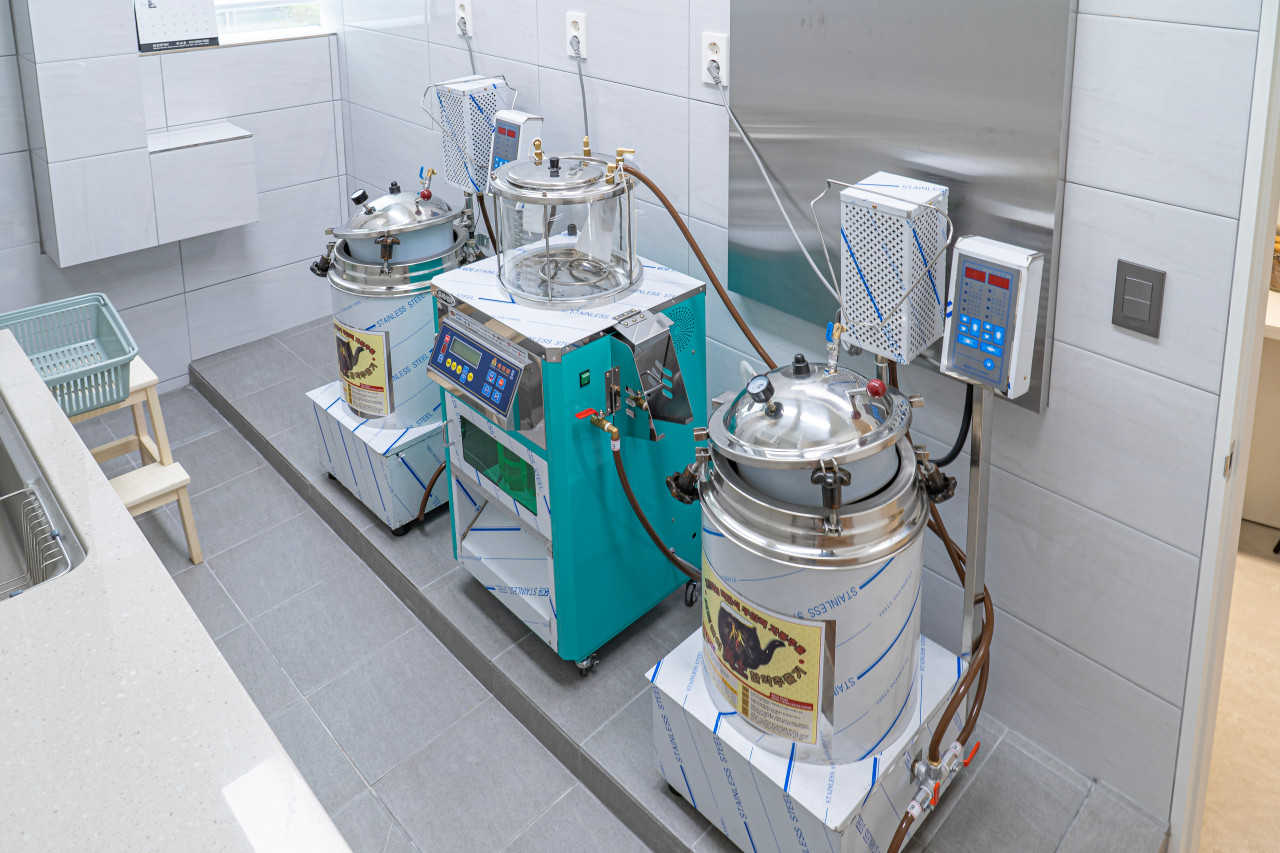
Herbal medicine for sleep has a substantial body of trials behind it. A 2025 network meta-analysis pooled 186 randomized trials of 13 herbal treatments; most scored better than conventional sleep medication on sleep quality, effectiveness and safety, and guipi decoction, a formula recorded in the Korean classic Dongui Bogam, ranked first for sleep quality.
The same word, insomnia, leads to quite different prescriptions, depending on what I find: a racing mind, heat at night, a tense stomach, or a body that is simply run down. How long you take it depends on how your sleep and your days respond, so I adjust as we go rather than fixing the length at the start.
ENERGY
Will your energy come back when your sleep does?
Usually, yes. As sleep settles, the floor of the day rises with it. Tiredness caused by short sleep tends to follow the sleep back within days.
Sometimes the tiredness stays after the nights are sorted: heavy mornings, a mid-afternoon crash, a weekend of rest that is gone by Monday. That is a body that has been running behind on recovery for months, and it fills up more slowly. Then I separate the two jobs, helping sleep and rebuilding energy, and start with whichever is more urgent. For the second, the gongjindan we make by hand in our own clinic is one of the options.
PROGRESS
How do we know it is getting better?
Sleep is easy to misjudge from memory. “I slept all right” and the number of times you actually woke often disagree, so a night that is improving can still feel like no change.
I check the same things at the start and a few weeks later: when you went to bed and how long it took to fall asleep, how many times you woke and how long it took to drift off again, and how the next day went. Total sleep may stay the same while the wake-ups fall, or the wake-ups may stay while getting back to sleep takes half as long. Those are different changes, and they lead to different adjustments. A few days of notes before your first visit, the time you slept, the time you woke and one line on the day, make that comparison far more precise.
TIME
Putting it off because of work?
Taking half a day off to see a doctor about sleep can feel like more trouble than it is worth, so it slips to next week, then the week after, while the nights stay the same. On Monday, Tuesday, Wednesday and Friday we are open until 8 PM, so you can come after work, and on Saturday from 10 AM to 3 PM.
SLEEPING PILLS
What if you already take sleeping pills?
You can start treatment while you are taking them. Tell me the name, the dose and how long you have been on them, because that shapes the plan. Please do not stop them on your own; any change is something we decide together.
For people who have relied on pills, the night without one can start to feel like a test before it even begins. That pressure keeps the body alert. So I look at the nights without a pill, not only at how many pills you take, and plan around them.
If you are lying awake more nights than not, message us. I will see you myself, in English, and we will start by mapping what your nights and days actually look like.
DEAR KOREAN MEDICINE CLINIC
About a 10-minute walk from Gangnam Station Exit 5 · +82-2-3486-1777
- Mon·Tue·Wed·Fri10:00–20:00
- Lunch13:00–14:00
- Thu14:00–20:00
- Sat10:00–15:00
- SunClosed
FAQ
Frequently asked questions
Can I come if I already take sleeping pills?
Yes. Tell me the name, the dose and how long you have been taking them. Please do not stop them on your own; any change is decided together at your consultation.
How many sessions will I need?
I agree the spacing and number of sessions with you at the first visit. In studies comparing acupuncture with sleeping medication, acupuncture pulled ahead from the third week, so a course of a few weeks is the useful unit.
Is acupuncture covered by insurance?
Yes. Acupuncture is covered by Korean national health insurance if you are enrolled, at the same fee as for Korean patients. Visitors without Korean insurance pay the uninsured fee, which we explain before treatment. Herbal medicine is not covered; I explain its cost before anything is prescribed.
Can I have my consultation in English?
Yes. Director Minji Kim consults directly in English, Japanese and Chinese, so you won’t need an interpreter.
How do I book?
Appointments are given priority, so we recommend booking before your visit. The most reliable way is an Instagram DM to @dearhani__, or you can call us at +82-2-3486-1777.
Sources
- Vgontzas AN, Chrousos GP. Sleep, the hypothalamic-pituitary-adrenal axis, and cytokines: multiple interactions and disturbances in sleep disorders. Endocrinol Metab Clin North Am. 2002;31(1):15–36.
- Li W, Wang Q, Dang C, Xiong Y, Lu Y. Chinese herbal medicine for insomnia: a systematic review and network meta-analysis. Medicine (Baltimore). 2025;104(33):e43789.
- Kim SA, Lee SH, Kim JH, et al. Efficacy of acupuncture for insomnia: a systematic review and meta-analysis. Am J Chin Med. 2021;49(5):1135–1150.
This article provides general health information and does not replace an individual diagnosis or treatment. Results differ from person to person.