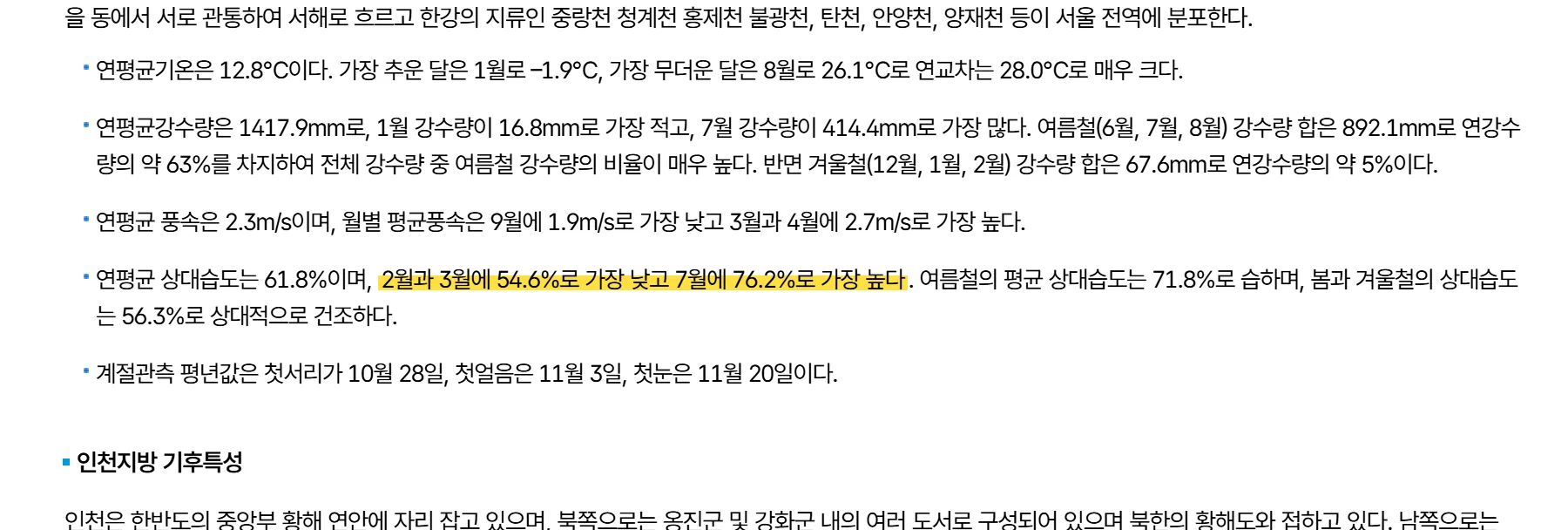
Korea's weather service keeps a 30-year average for every month in Seoul. Relative humidity bottoms out at 54.6% in February and March, stays under 58% from December through April and peaks at 76.2% in July, and the three winter months bring 67.6 mm of precipitation between them, about 5% of the year's total. If your skin stayed calm through a sticky Seoul summer and started cracking once the weather turned cold, those numbers line up with what you feel.
"The itch keeps me up, and I scratch in my sleep." "Moisturizer helps for a moment, and all I'm left with is scars." I hear lines like these often when eczema flares at the change of seasons. Both come down to three words, it flared again, and several things sit inside those words at once, starting with the air.
WHY WINTER
Why does eczema flare in a Seoul winter?
- 56.2Jan
- 54.6Feb
- 54.6Mar
- 54.8Apr
- 59.7May
- 65.7Jun
- 76.2Jul
- 73.5Aug
- 66.4Sep
- 61.8Oct
- 60.4Nov
- 57.8Dec
Korea Meteorological Administration climate normals, 1991–2020, Seoul station, redrawn by DEAR. The bars start at 40% so the gap between months is visible. These are outdoor averages; indoor air with the heating on is not measured here.
A 2016 review of the studies on weather and skin concluded that low humidity and low temperature weaken the skin barrier and make skin more reactive to irritants and allergens, and that cold, dry weather raises both how common atopic dermatitis is and the risk of flares.1 Seoul has its own record of this. A team followed 177 young children with atopic dermatitis in the Seoul metropolitan area for 17 months, more than 35,000 days of symptom diaries in all. On days that were 5°C warmer, symptoms were 12.8% lower; on days 5 percentage points more humid, they were 3.3% lower, on the same day.2 Those were small children rather than adults, but it was Seoul's air.
When the barrier weakens, moisture leaves the skin faster, the immune system overreacts to triggers like dust, food, temperature changes and humidity, and the inflammation runs deeper. The skin itches, scratching opens it, and in time the scratched areas weep yellow fluid and leave darker patches behind. Moisturizer helps the outer layer, which is why it helps for a while. It does not reach what else is going on.
IT FLARED AGAIN
What is inside "it flared again"?
Sleep comes next. In a US national survey of 5,563 adults, 33.4% of those with atopic dermatitis had told a clinician they had trouble sleeping, against 23.7% of those without it, and their odds of waking too early in the morning were 1.86 times higher.3 The patient lines above already put the two together: the itch keeps you up, and you scratch in your sleep.
Then there is stress. After the 1995 Great Hanshin earthquake in Japan, doctors surveyed 1,457 patients with atopic dermatitis. In the worst-hit area, 38% said their skin had gotten worse, against 7% in the area with no damage, and the factor most strongly tied to worsening was how distressed people felt (odds ratio 2.98).4 Ordinary stress is no earthquake, yet the patient in the case below saw the same pattern on a smaller scale: every crunch period at work brought the eczema back.
A diagram by DEAR drawing together the studies and patient accounts above. It shows how the pieces meet, not a sequence measured in one person.
Last comes your constitution, and this is where Korean medicine reads eczema differently. I describe it as heat that rises to the skin. Sometimes there is simply too much heat; sometimes the heat cannot circulate, gets stuck and pushes upward, while other parts of the body feel cold. People with a hotter constitution tend to get red patches and fierce itch, while those leaning colder are left with yellow weeping and eczema that lingers. Which of the two you are changes the prescription, so this is the first thing I look for.
AT DEAR
Eczema treatment at DEAR
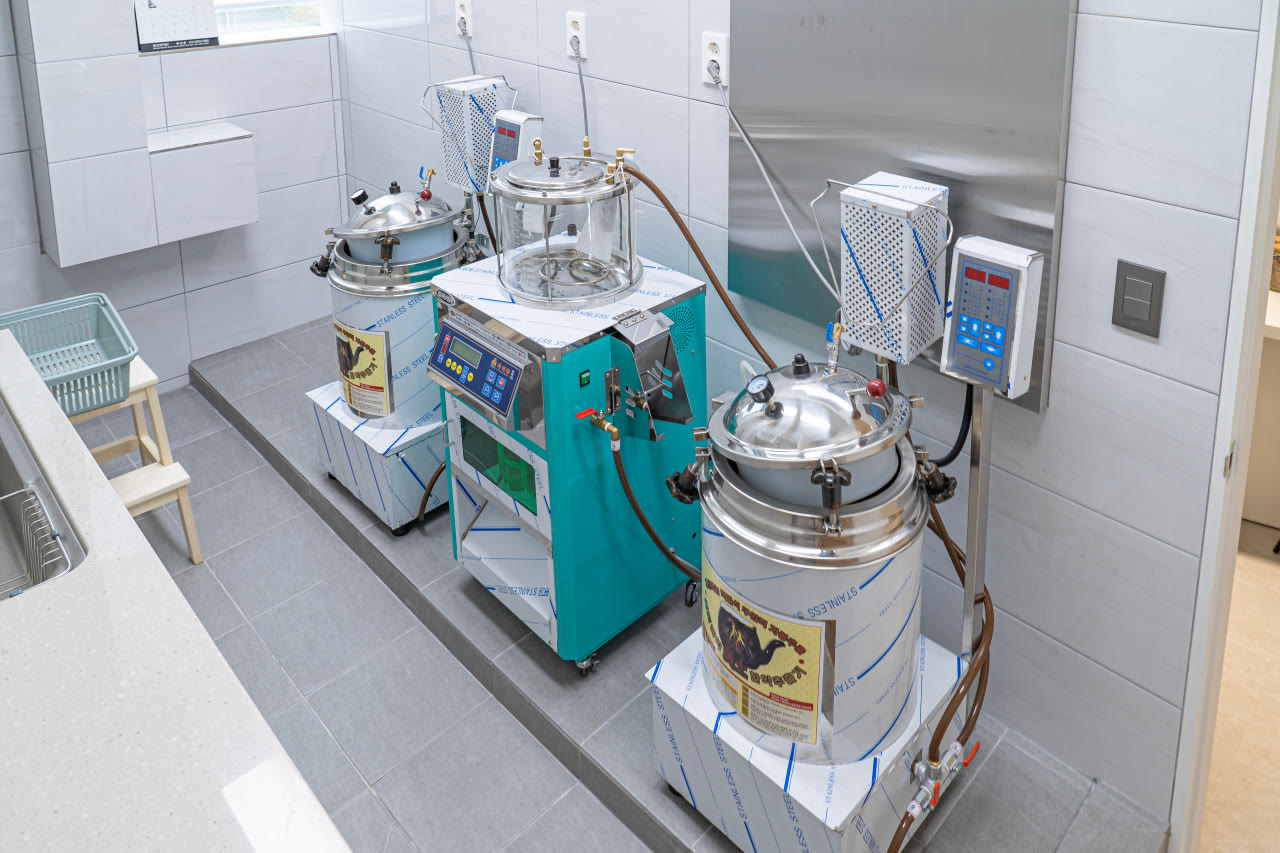
At the first visit I look at your constitution, the symptoms you have now, how severe they are and how much skin they cover, and identify the pattern behind them. The herbal medicine I prescribe from that pattern does more than cool red skin down; it aims to bring the body's immune balance and circulation back to normal, and it is brewed for you in our own decoction room.
- ACUTE FLARESettle the heat and the itch first
When the skin is red, hot and itching, treatment aims to calm the heat and the itch quickly.
- CHRONIC PHASERepair the skin so it does not scar
When eczema has been there for a while, treatment shifts to speeding up skin repair and wound healing so the scratched areas do not leave scars.
If your stomach feels heavy or your sleep is poor, I add herbs for those as well, as I did for the patient below. Acupuncture runs alongside the herbal medicine. For daily habits, I do not hand out a list of foods to ban; late-night eating, greasy food, caffeine, irregular sleep and stress are all known to make eczema worse, so we look for realistic substitutes that fit the way you actually live and work.
Eczema that came back whenever work got hard
An office worker in their 30s · eczema on the legs, worse with stress, waking at night to scratch
Every stressful stretch at work brought the eczema back. Their stomach felt heavy, and the itch woke them at night; the legs were covered in scratches that bled and scabbed over and over. Moisturizer had helped only for a while.
I identified a pattern of stagnation and poor circulation and prescribed a small amount of herbal medicine to release it, with herbs added for digestion and sleep, alongside acupuncture.
The redness on the legs had faded and the scratches healed faster. "I wake up less at night, and there's no blood on the sheets in the morning anymore."
Identifying details have been removed. This describes one patient's course; the same results will not appear in everyone.
Read what patients say about DEAR
THE LONGER READ
THE EVIDENCE
What does the research say about herbal medicine for eczema?
Korea has a clinical practice guideline for treating atopic dermatitis with Korean medicine, published by the Korea Institute of Oriental Medicine in its revised edition of 2015. It recommends herbal prescriptions chosen by pattern identification, grade B, based on trials in which eczema severity scores fell further than in the comparison groups without side effects.5 A 2023 review of 17 randomized trials and 1,624 patients found more people recovered with herbal medicine (risk ratio 1.15), and the odds of eczema coming back were about a fifth of those in the comparison groups (odds ratio 0.19).6 That last number matters most, because calm skin is not the finish line. The skin has recovered when the whole body is comfortable and the itch stops coming back, and once immune balance and circulation are restored, the skin heals at its own pace again. Eczema asks for patience rather than speed, and that is the pace I plan treatment around.
ACUPUNCTURE
Is there evidence that acupuncture eases eczema itch?
For the itch, the same guideline goes further. It gives acupuncture to relieve the itch of atopic dermatitis grade A, its strongest recommendation, based on two randomized trials in which itch scores came out 8.9 points lower with acupuncture.5
Since then, a trial at Kyung Hee University in Seoul gave 36 adults aged 19 to 38 with mild to moderate atopic dermatitis acupuncture twice a week for four weeks, against a blinded control group. Eczema severity on the SCORAD scale fell by 11.83 points with acupuncture and rose by 0.45 in the control group, and the improvement held for at least four weeks after treatment ended, with no serious side effects.7 A 2024 review that pooled 8 randomized trials and 463 patients found SCORAD 10.61 points lower and itch 14.71 points lower on a 100-point scale with acupuncture, both large enough for patients to feel the difference.8
Park et al. (2021), 36 adults with mild to moderate atopic dermatitis, redrawn by DEAR. A lower SCORAD means milder eczema.
AT HOME
What can I do at home through a dry winter?
- Moisturize well right after you shower.
- Shower soon after you sweat.
- Go easy on fried food, late-night eating, spicy food and wheat-based foods like bread and noodles, without turning it into a ban.
- On a stressful day, take a walk or a few quiet minutes of meditation.
- Wear soft cotton to cut down on friction.
Treatment does not stop at the clinic door. These habits hold the skin steady between visits and give the herbal medicine and acupuncture something solid to work on, and that matters most in the months when Seoul's air is driest.
DEAR KOREAN MEDICINE CLINIC
About a 10-minute walk from Gangnam Station Exit 5 · +82-2-3486-1777
- Mon·Tue·Wed·Fri10:00–20:00
- Lunch13:00–14:00
- Thu14:00–20:00
- Sat10:00–15:00
- SunClosed
FAQ
Frequently asked questions
Can acupuncture help eczema itch?
Yes. Korea's clinical practice guideline for treating atopic dermatitis with Korean medicine gives acupuncture for itch its highest grade, A, and a 2024 review of 8 randomized trials found itch 14.71 points lower on a 100-point scale with acupuncture. At DEAR I use acupuncture alongside herbal medicine chosen for your constitution.
Why is my eczema worse in Korea's winter?
Seoul's average humidity falls to 54.6% in February and March, against 76.2% in July, and cold, dry air weakens the skin barrier. In a Seoul study of young children with eczema, each 5°C drop and each 5-percentage-point drop in humidity went with more symptoms the same day. Short sleep and stress in the same season push it further.
Is eczema treatment covered by insurance?
Acupuncture is covered by Korean national health insurance if you are enrolled: you pay 30% of a fee set by the government. Visitors without Korean insurance pay the uninsured fee, explained before treatment. Herbal medicine is not covered; we tell you the price during the consultation, before anything is made, and it is the same for Korean and international patients.
Can eczema start in adulthood?
Yes. Eczema that was quiet in childhood can show up later as adult eczema, and some people first meet it after a move or a stressful year. At DEAR I treat adults with eczema, looking at the skin and at the constitution behind it.
How soon will I notice a difference?
It depends on whether you come in during an acute flare or with eczema that has been there for months. In a flare, treatment aims to settle the heat and itch first; in the patient described above, redness had faded and the night waking eased within a month. Long-standing eczema takes steady treatment, because the goal is skin that stops flaring, not only skin that looks calm today.
Can I have my consultation in English?
Yes. I consult in English myself, and in Japanese and Chinese, so you won't need an interpreter.
How do I book?
Appointments are given priority, so we recommend booking before your visit. The most reliable way is an Instagram DM to @dearhani__, or you can call us at +82-2-3486-1777.
Sources
- Engebretsen KA, Johansen JD, Kezic S, Linneberg A, Thyssen JP. The effect of environmental humidity and temperature on skin barrier function and dermatitis. J Eur Acad Dermatol Venereol. 2016;30(2):223–249.
- Kim YM, Kim J, Han Y, et al. Short-term effects of weather and air pollution on atopic dermatitis symptoms in children: a panel study in Korea. PLoS One. 2017;12(4):e0175229.
- Yu SH, Attarian H, Zee P, Silverberg JI. Burden of sleep and fatigue in US adults with atopic dermatitis. Dermatitis. 2016;27(2):50–58.
- Kodama A, Horikawa T, Suzuki T, et al. Effect of stress on atopic dermatitis: investigation in patients after the great Hanshin earthquake. J Allergy Clin Immunol. 1999;104(1):173–176.
- Korea Institute of Oriental Medicine. Korean Medicine Clinical Practice Guideline for Atopic Dermatitis, revised edition (in Korean). 2015.
- Jia J, Gu SX, Mo X, et al. An updated systematic review and meta-analysis of efficacy and safety of Chinese herbal medicine for treating atopic dermatitis. J Dermatolog Treat. 2023;34(1):2268766.
- Park JG, Lee H, Yeom M, et al. Effect of acupuncture treatment in patients with mild to moderate atopic dermatitis: a randomized, participant- and assessor-blind controlled trial. BMC Complement Med Ther. 2021;21(1):132.
- Liang S, Huang KY, Zhang L, et al. Acupuncture for atopic dermatitis: a systematic review and meta-analysis. BMJ Open. 2024;14(12):e084788.
- Korea Meteorological Administration. Regional climate characteristics, Seoul and Gyeonggi: climate normals 1991–2020 (in Korean). Read November 2, 2026.
This column is general health information and does not replace an individual diagnosis or treatment. Results differ from person to person.